
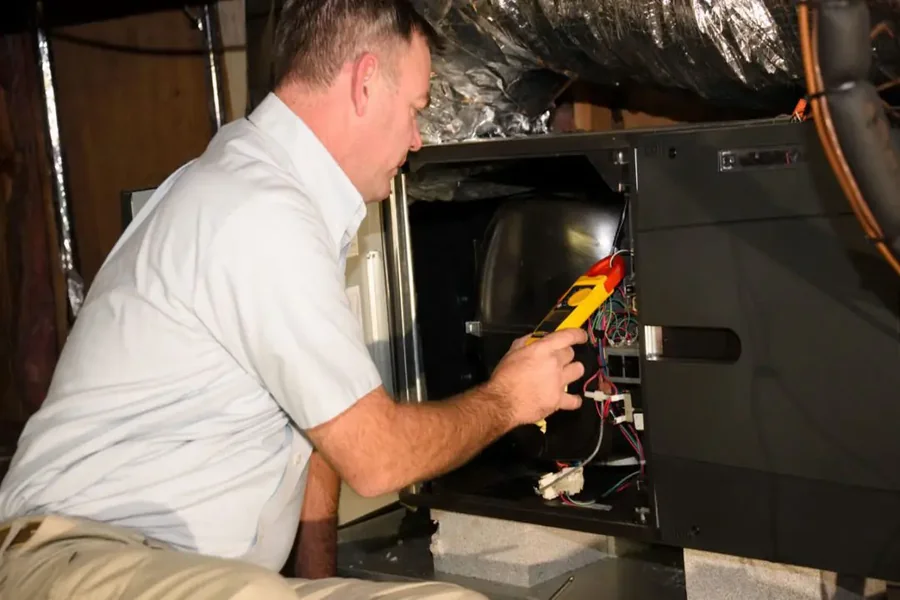
A furnace does not have to stop working to signal that something is wrong. In many buildings, the first warning is noise. A loud bang at startup, a hard pop when the system shuts down, or a sharp metallic thud during the heating cycle is often dismissed as harmless “old equipment behavior,” even though it may actually indicate airflow, combustion, or expansion problems that deserve attention.
For property managers, facility managers, and building owners, those sounds matter because they often show up before comfort complaints or full breakdowns. A furnace that starts or stops loudly is usually reacting to stress somewhere in the system. The real task is not just identifying the sound. It is about understanding which part of the startup or shutdown process is causing it and whether that condition is worsening over time.
Where The Sound Begins Matters
-
Startup And Shutdown Sounds Matter
Noise at startup or shutdown usually means the furnace is struggling during a transition point. The system is either coming under load, changing temperature rapidly, or releasing pressure and movement as it cycles off. Those moments reveal problems that may remain hidden while the furnace runs steadily. A unit can deliver heat and still make noises that indicate uneven burner ignition, duct movement, delayed airflow, or expanding metal under strain.
That is why timing matters so much in diagnosis. A loud sound the moment the burners ignite suggests a different cause than a pop several seconds later, or a boom right after the blower shuts off. The sequence helps quickly narrow the issue. Good service does not treat every furnace noise as one generic complaint. It traces the sound back to the exact stage of operation where the stress occurs.
-
Looking Beyond The Noise Itself
A careful technician does not assume the noise is coming from the furnace cabinet alone. Loud startup and shutdown sounds can come from the burner section, heat exchanger area, blower compartment, ductwork, or nearby sheet metal reacting to sudden pressure or temperature changes. The sound may seem to come from one location when the actual source is farther along the system.
That is especially true in homes and commercial spaces across Gaithersburg, where duct layouts, older equipment combinations, and retrofit conditions can affect how noise travels and is perceived indoors. A bang near a hallway return may sound like a furnace problem when the real issue is pressure movement in the duct system. Reliable diagnosis begins with accurately locating the source before drawing conclusions based on the volume of the sound alone.
-
Delayed Ignition Can Cause Banging
One of the most important causes of loud startup noise is delayed ignition. This happens when gas enters the burner area but does not ignite immediately. Instead of lighting cleanly at the expected moment, it builds briefly and then ignites all at once, creating a boom or bang. That sound is not normal, and it should not be ignored simply because the furnace continues to run afterward.
Delayed ignition may result from dirty burners, a weak igniter, burner misalignment, poor gas flow, or ignition timing problems. The concern is not just the noise. Repeated rough ignition puts stress on the furnace and can create unsafe operating conditions if left unresolved. A furnace that lights with a bang is often a warning that combustion is no longer occurring in a controlled, consistent manner.
-
Duct Expansion Creates Sharp Popping
Not every loud noise comes from the burner section. In many buildings, startup and shutdown noises are caused by ductwork expanding and contracting as temperature and air pressure change rapidly. When hot air enters cooler sheet metal, the metal can flex with a pop, ping, or thud. The same thing can happen when the blower shuts off, and the duct begins to cool, or when pressure drops quickly.
This is common in systems with long duct runs, undersized ducts, poorly supported sheet metal, or abrupt transitions. While some expansion noise is minor, louder, recurring sounds often suggest the duct system is reacting too aggressively to pressure or temperature changes. That may point to airflow restriction, high static pressure, loose metal panels, or layout conditions that amplify movement. In those cases, the furnace may be operating, but the system around it is not handling air delivery smoothly.
Repeated Noise Means Something Is Changing
A furnace makes loud noises when it starts or shuts off because something in the system is reacting poorly to ignition, airflow, pressure change, or temperature movement. Delayed ignition, dirty burners, blower timing issues, duct expansion, loose hardware, and high-temperature stress can all create the kinds of sounds that occupants notice right away. The noise may not stop the furnace today, but it often signals that operation is becoming less controlled.
For property managers and building owners, that makes these sounds worth investigating early. A furnace that bangs or pops regularly is not simply being loud for no reason. It is usually revealing a condition that can often be corrected before it leads to higher repair costs, occupant complaints, or a full heating interruption. When the sound is traced to its true source, the fix becomes more precise, and the heating system becomes easier to trust for the rest of the season.