
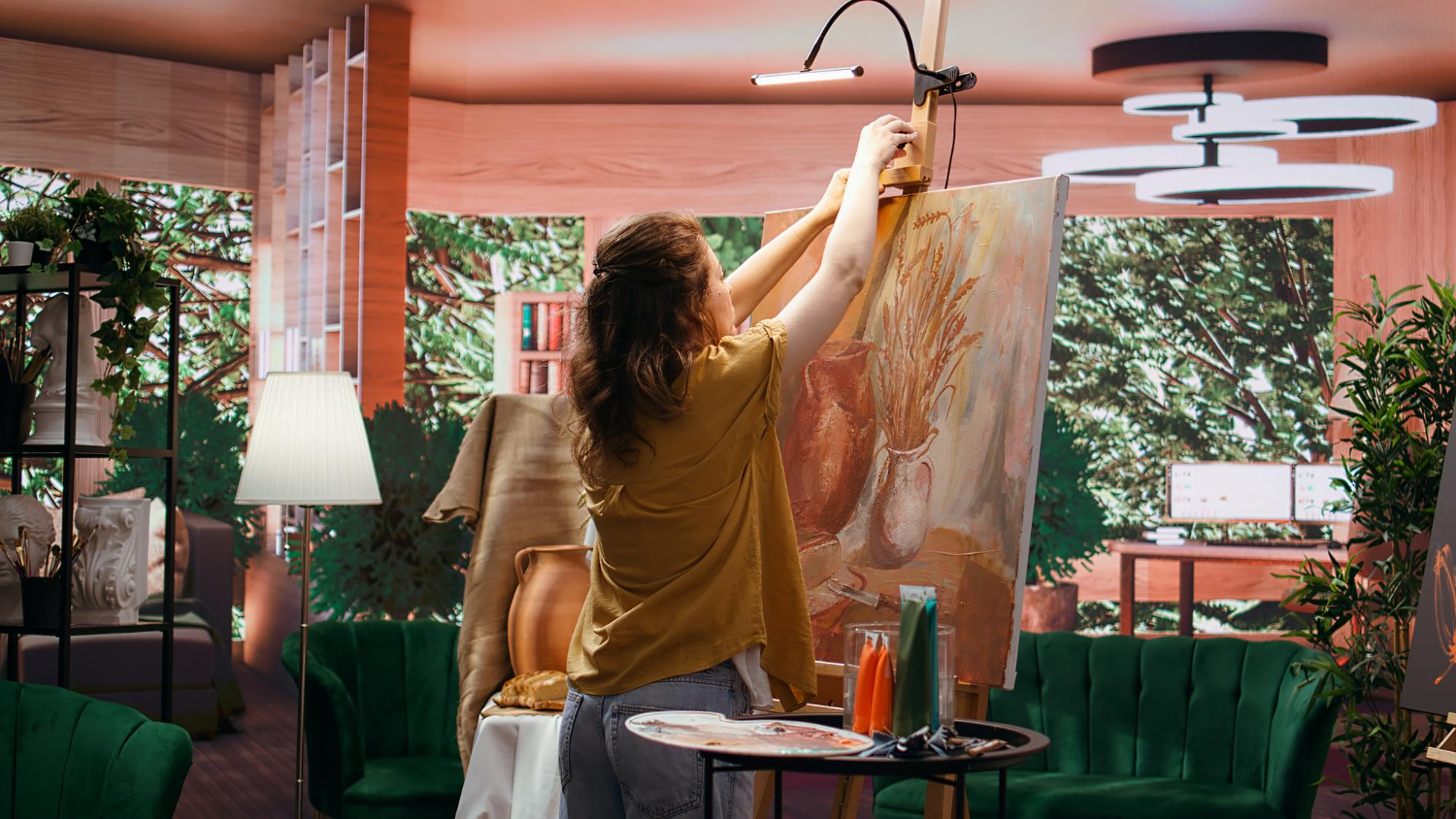
The evolution of modern interior design has reached a fascinating crossroads in 2026. While the previous decade was dominated by “quiet luxury” and a relentless adherence to neutral palettes, the current movement focuses on the psychological impact of our surroundings.
We no longer just “view” art; we cohabitate with it. The challenge for the discerning collector lies in integrating high-energy, vibrant pieces into homes and offices without disrupting the architectural harmony of the space.
Sophistication is found in the equilibrium between minimalism and personality. Incorporating bold, modern art is not about volume—it is about the strategic placement of a visual protagonist that dictates the energy of a room.
Redefining luxury through intentional color and geometry
A common hesitation in modern decor is the fear that vibrant colors will feel “noisy” or overwhelming. However, the contemporary “dopamine decor” movement suggests that color, when applied with intent, is a necessary counterpoint to the stark glass and concrete of modern structures.
The secret lies in the interplay of geometry and hue. A piece characterized by bold lines and a vivid palette acts as a structural element in a room rather than a mere accessory. In a minimalist living room or a high-end corporate office, a singular modern artwork provides a “soul” to the environment. It breaks the monotony of beige and gray, offering a warmth that architecture alone cannot provide.
Establishing a visual anchor: the focal point strategy
To incorporate modern art without “overdoing it,” one must adopt a curatorial mindset. Rather than scattering small prints across every available surface, the objective should be to establish a focal point.
- At Home: A large-scale canvas in a dining area or above a fireplace creates a conversation starter. It allows the furniture and rugs to remain neutral, letting the art do the heavy lifting of expressing personality.
- In the office: A vibrant sculpture or limited-edition print in a reception area or conference room signals innovation and optimism. It transforms a sterile workspace into a creative ecosystem.
By allowing one piece to be the “sole protagonist” of a wall, you ensure that the visual language remains clear and sophisticated. The art becomes an anchor for the room’s energy, providing a daily dose of inspiration without causing sensory fatigue.
Sourcing with intentionality and ensuring provenance
In an era of mass-produced reproductions, the value of an art collection is intrinsically tied to its authenticity and origin. Giving a space a high-end feel requires more than just color; it requires the weight of a genuine artistic legacy.
When curating your home or office, the safest and most sophisticated strategy is to engage directly with the primary source of the work. Navigating the diverse collections at Romero Britto’s official shop ensures that every object—whether a large-scale sculpture or a functional design piece—carries the proper provenance and quality control. This direct channel eliminates the uncertainty of the secondary market and guarantees that the piece is a genuine reflection of the artist’s vision of hope and happiness.
Functional art: the subtle integration of personality
For those wary of large-scale commitments, “functional art” offers a refined entry point. Incorporating collectible design objects—such as porcelain vases, stylized desk accessories, or small-form sculptures—allows the collector to pepper a space with personality in a more intimate way.
Functional art is particularly effective in an office setting. A designer object on a desk or a bookshelf acts as a private visual retreat, providing a moment of aesthetic relief during a busy day. It allows the user to interact with art on a tactile and sensory level, making the workspace feel more human and less transactional.
The sensory impact: art as a visual stabilizer of optimism
Beyond the immediate visual appeal, the integration of vibrant art into a daily environment acts as a sensory stabilizer. In a world that can often feel chaotic or overly clinical, the presence of art that celebrates life through bold patterns and optimistic colors serves a psychological purpose.
Britto’s work, for instance, uses a specific visual vocabulary of Cubism and Pop Art to communicate resilience and joy. When placed in a home or office, these pieces act as permanent anchors of positive energy.
They do more than just fill a void on a wall; they shape the emotional atmosphere of the space. By choosing art that reflects a “joie de vivre,” you are investing in the long-term well-being of the inhabitants, creating a space that feels both professionally elevated and deeply personal.
Effective curation in 2026 is about making a statement that values quality over quantity. By prioritizing authenticity, choosing strategic focal points, and embracing the emotional power of color, you can transform any environment into a sophisticated reflection of modern creativity.