
Key Takeaways
- Carefully assess your family’s passenger and cargo space requirements before choosing an SUV.
- Give high priority to the latest safety features and crash test ratings from trusted organizations.
- Balance fuel efficiency and on-road performance with your driving habits and financial goals.
- Don’t overlook ongoing expenses like maintenance and insurance when calculating the cost of ownership.
- Always test drive several models to ensure comfort and versatility for your family.
Table of Contents
- Assessing Space Requirements
- Prioritizing Safety Features
- Evaluating Fuel Efficiency and Performance
- Considering Total Cost of Ownership
- Test Driving and Finalizing Your Choice
Choosing the right family SUV has a lasting impact on your family’s comfort, safety, and peace of mind. The market today is filled with options, making it all the more important to approach the process thoughtfully. Before you start browsing options or scheduling visits with a Honda Pilot dealership, understanding your family’s unique priorities will ensure you find a vehicle that perfectly fits your lifestyle.
From accommodating growing families to providing advanced safety features and delivering reliable performance, a well-chosen SUV can make your everyday life easier and more enjoyable. Whether you’re planning cross-country trips or simply need a vehicle for daily school runs and errands, getting the right family SUV is an investment in convenience and security.
Many families make the mistake of focusing only on the latest models or flashy features. It’s better to take a practical approach, thinking about how you use your vehicle now and how your needs might change in the next few years. This helps you avoid costly regrets and ensures your investment will last.
Additionally, when you are ready to start visiting dealerships for a closer look at your options, consider starting your search at a Honda Pilot dealer near me for a highly rated SUV experience.
Assessing Space Requirements
Begin by determining how much space your family really needs. Count current family members, and plan for future changes, such as adding children or the possibility of having relatives ride along. Think about the car seat and booster seat configuration if you have young children. A growing family will benefit from a three-row SUV, while a smaller family may find a two-row model more practical and economical.
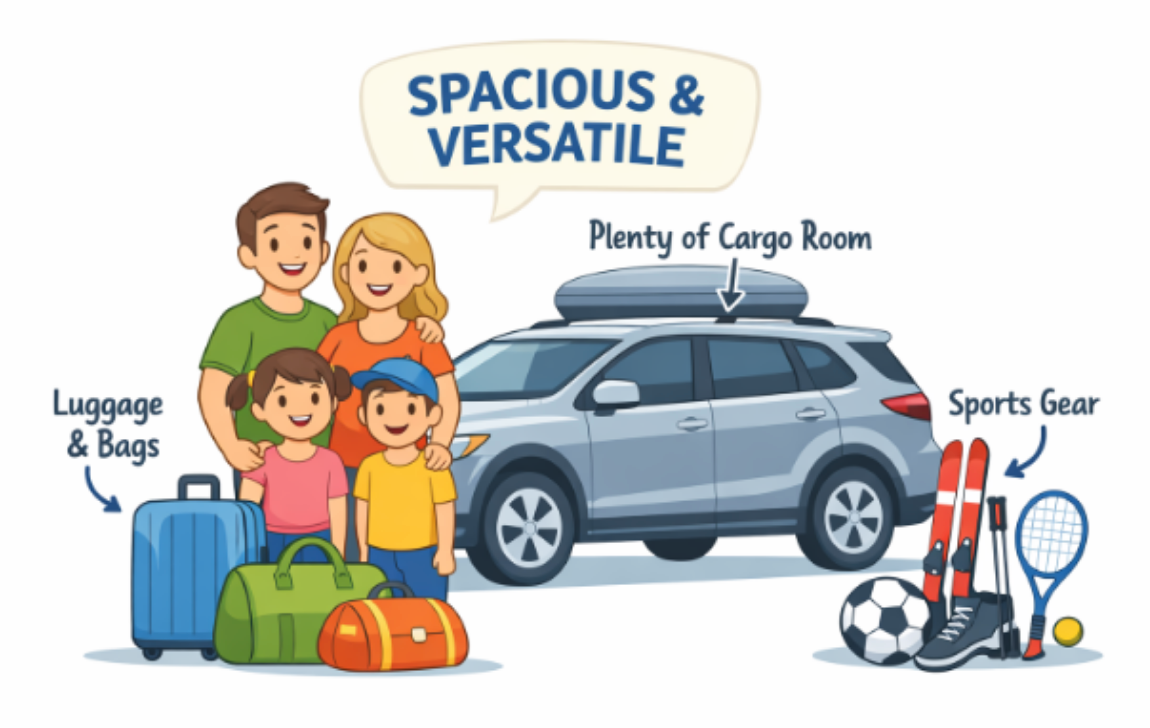
Cargo space is just as important as passenger accommodation. Evaluate how often you’ll need to haul luggage, sports gear, strollers, or pets. Fold-down rear seats, split-level storage, and easy access to the trunk are all invaluable for family life. MotorTrend offers additional insights into the best SUVs for families, highlighting space and convenience features across brands.
Prioritizing Safety Features
Family vehicles require a higher safety standard than most cars. When comparing models, look for SUVs that come equipped with automatic emergency braking, adaptive cruise control, blind-spot monitoring, and lane departure warnings. These driver-assistance systems reduce the risk of accidents and make long trips less stressful. It’s also wise to check the crash test ratings from the Insurance Institute for Highway Safety (IIHS). High marks in these evaluations signal strong protection for you and your passengers.
Don’t overlook other handy features such as rear cross-traffic alerts, child safety locks, and easy-to-use LATCH connectors for child seats. All these details add up to create a genuinely family-friendly environment on the road.
Evaluating Fuel Efficiency and Performance
Fuel efficiency is an area where savvy shoppers can save significantly, particularly with gas prices fluctuating. Carefully review the fuel economy ratings for each SUV you consider, paying attention to the differences between front-wheel drive, all-wheel drive, and four-wheel drive options. Increasingly, automakers are offering hybrid and electric SUVs that promise lower running costs and eco-friendly operation.
However, remember to balance this with your need for power and performance. If your family takes frequent road trips or lives in an area with challenging weather, an SUV with robust handling and higher horsepower may be essential. Many models offer different engine choices to help you find the right mix of power and efficiency. Research reviews and firsthand accounts provide a clear idea of real-world performance and costs.
Considering Total Cost of Ownership
Beyond the initial sticker price, examine the total cost of owning your SUV. Maintenance schedules and reliability records should steer your choice toward brands and models known for durability. Some SUVs have higher resale values and lower rates of depreciation, which boosts your investment over time. Insurance costs can vary widely depending on the vehicle’s safety features, repair costs, and theft statistics.
Ask dealerships and insurance agents for estimates on average annual costs, and consult online resources to compare reliability and repair histories. Factoring these elements into your decision can help save money and frustration in the long run.
Test Driving and Finalizing Your Choice
Once you’ve narrowed your checklist to a handful of promising models, it’s time to set up test drives. Comfort and ergonomics are best evaluated in person. Try loading in a stroller, using the rear seats, and seeing how car seats or boosters fit. Bring family members along to get their feedback, too. Focus on visibility, intuitive controls, ride quality, noise levels, and how easily you can adjust the seating and climate.
Make notes on how each model handles, especially if you drive in varied environments like city streets and highways or face inclement weather. This step ensures your final decision isn’t just based on statistics but is also the best match for your family’s everyday reality.
By carefully assessing your current and future needs and staying focused on the factors that matter most, you can confidently choose a family SUV that provides space, safety, value, and performance for years to come.