
According to a 2023 study by Nielsen, 59% of consumers prefer to buy products from brands they already know and trust, highlighting the importance of strong brand recognition and consistency. At the same time, research from Lucidpress found that consistent branding can increase revenue by up to 33%, demonstrating how a unified brand presence directly influences business performance. As companies expand their product lines, enter new markets, and acquire new businesses, maintaining this consistency becomes increasingly challenging.
This is where brand architecture becomes essential. More than just organizing logos and product names, brand architecture is the strategic framework that determines how a company’s brands, products, and services relate to one another. It creates clarity for customers, strengthens brand identity, and helps businesses make smarter decisions about growth.
Whether a company operates under one recognizable name or manages a portfolio of different brands, a well-designed brand architecture ensures that every part of the organization works together toward shared goals.
Understanding Brand Architecture
At its core, brand architecture defines the relationship between a parent company and its various offerings. It answers important questions: Should every product use the company’s main name? Should different services have independent identities? How can customers understand the connection between multiple brands?
A strong brand architecture prevents confusion by establishing clear roles and relationships. For example, a company launching new products or entering new markets needs a structure that allows growth without weakening its overall identity. Without a strategic approach, businesses risk creating disconnected brands that compete for attention and resources.
Brand architecture is especially important for companies with diverse product portfolios, acquisitions, or global operations. It provides a roadmap for organizing everything from product names and messaging to visual identity and marketing strategies.
The Main Types of Brand Architecture
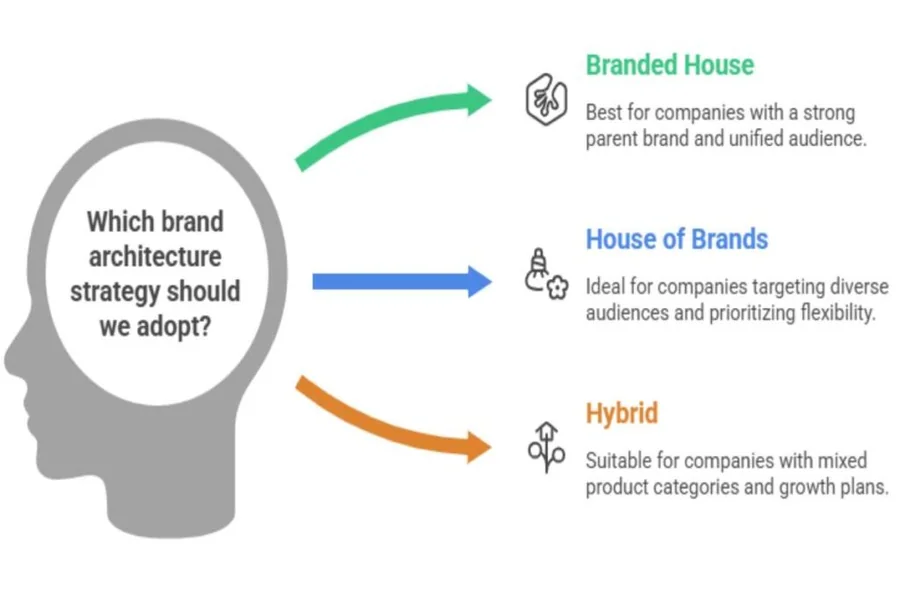
Businesses typically use one of three major brand architecture models: branded house, house of brands, or a hybrid approach.
A branded house uses one primary brand name across all products and services. Every offering benefits from the reputation and recognition of the main brand. This approach creates consistency and makes marketing efforts more efficient. Companies using this model often focus on building one powerful identity that customers can easily recognize.
A house of brands takes the opposite approach. In this model, a parent company owns multiple independent brands, each with its own identity, audience, and positioning. Customers may not always know that these brands belong to the same organization. This structure allows businesses to target different markets and customer segments without connecting every product to the same reputation.
A hybrid brand architecture combines elements of both approaches. Some products operate under the main company brand, while others maintain separate identities. This model offers flexibility and is common among large organizations with diverse offerings.
Choosing the right structure depends on factors such as business goals, customer expectations, market competition, and future growth plans.
Why Brand Architecture Matters
A carefully planned brand architecture provides several strategic advantages. One of the most important benefits is improved customer understanding. When brands and products have clear relationships, customers can quickly recognize what a company offers and why different products belong together.
Consistency is another major advantage. A strong architecture ensures that messaging, design, and customer experiences align across different channels. This builds trust because customers know what to expect from the brand.
Brand architecture also supports business growth. When companies introduce new products, enter new markets, or acquire other businesses, a clear structure helps determine how those changes should fit into the existing brand ecosystem. Instead of making decisions based on short-term opportunities, businesses can evaluate whether new initiatives strengthen or weaken the overall portfolio.
Additionally, effective brand architecture improves internal decision-making. Teams across marketing, sales, product development, and leadership can better understand how individual offerings contribute to the broader business strategy.
The Role of Brand Architecture in Customer Perception
Customers rarely experience brands in isolation. They form opinions based on every interaction, including product quality, advertising, customer service, and online presence. Brand architecture influences how customers interpret these experiences.
A confusing brand structure can create uncertainty. If customers cannot understand how products relate to each other, they may question credibility or struggle to identify the best solution for their needs. On the other hand, a clear architecture creates a sense of reliability and professionalism.
Strong brand architecture also helps businesses build emotional connections. When customers understand the values behind a brand and see consistency across offerings, they are more likely to develop loyalty and trust.
For example, when a company introduces a new product line, customers are more likely to accept it when they understand how it fits into the existing brand story. A clear relationship between the parent brand and its extensions can transfer trust and recognition from established products to new ones.
Common Brand Architecture Challenges
Developing effective brand architecture is not always simple. One common challenge is balancing consistency with flexibility. While a unified brand identity can create recognition, too much control may limit creativity and prevent individual products from connecting with specific audiences.
Another challenge is managing brand transitions. Companies frequently evolve through mergers, acquisitions, rebranding efforts, or new product launches. These changes require careful planning to avoid confusing existing customers.
Businesses must also consider whether new offerings should strengthen the main brand or operate independently. A product that does not align with the company’s reputation or values may require a separate identity to protect the overall brand.
Poorly planned brand expansion can also dilute brand equity. When companies introduce too many unrelated products under the same name, customers may lose sight of what the brand represents. Effective architecture helps businesses avoid this problem by creating clear boundaries and strategic connections.
Creating a Successful Brand Architecture Strategy
Building effective brand architecture begins with understanding the company’s long-term vision. Businesses should evaluate their current portfolio, customer expectations, competitive environment, and future growth opportunities.
The process typically involves defining brand roles, establishing naming systems, creating clear relationships between brands, and developing consistent messaging guidelines. Regular evaluation is also important because markets, customer behaviors, and business priorities change over time.
Successful brand architecture is not simply about organizing names and logos. It is about creating a strategic system that helps every part of the business communicate a unified purpose.
Companies should also consider how their architecture supports digital experiences. With customers discovering brands through search engines, social media, and online marketplaces, clarity and consistency are more important than ever. A well-structured brand ecosystem makes it easier for customers to navigate offerings and understand the value behind each product or service.
Brand architecture serves as the foundation for how companies manage, grow, and communicate their brands. As businesses expand and customer expectations become more complex, having a clear structure is essential for maintaining consistency and building long-term value.
A thoughtful brand architecture strategy allows companies to balance innovation with recognition, create stronger customer connections, and make confident decisions about future growth. Whether a business manages one core brand or a portfolio of multiple identities, the right architecture ensures that every element works together to support a stronger, more memorable brand presence.
In a marketplace where customers are constantly choosing between competing brands, can businesses afford to overlook the importance of a clear brand structure? And as companies continue to expand, adapt, and introduce new offerings, will their brand architecture be strong enough to support the next stage of growth?