
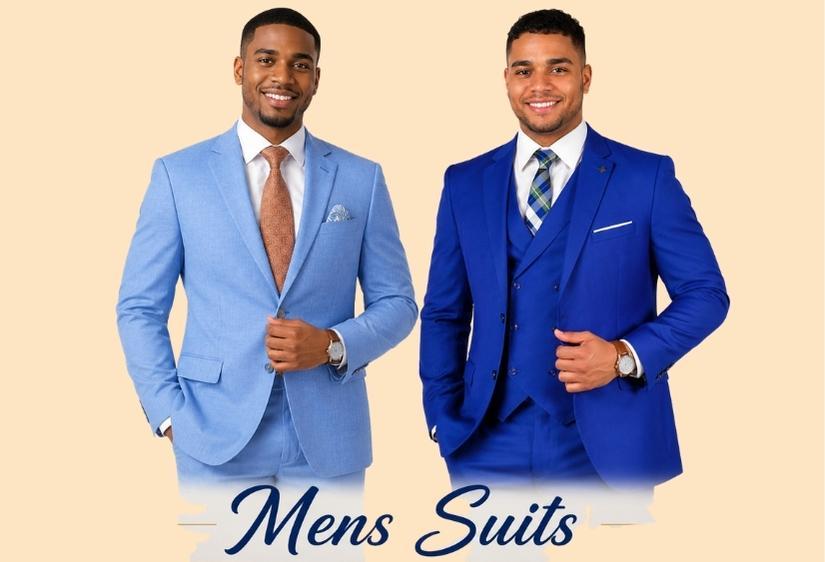
Mens suits can be made from the finest fabric available, but if the proportions are off, none of that quality translates visually. Fit, far more than price tag, is what actually transforms how a suit reads on a person.
Why Fit Outweighs Everything Else
A suit that's too loose creates a shapeless silhouette, hiding the body's natural lines and often making the wearer look smaller or less put-together than they are. One that's too tight restricts movement and tends to pull awkwardly at the buttons and seams. The right fit does something subtler — it follows the body's natural structure closely enough to look intentional, without ever feeling constricting.
The Measurements That Matter Most
A handful of fit points make the biggest visible difference:
- Shoulder seams — These should sit exactly at the edge of the shoulder bone. Too far in or out, and the whole jacket looks misaligned regardless of anything else.
- Sleeve length — Roughly a quarter to half inch of shirt cuff showing is the generally accepted benchmark.
- Trouser break — A slight break at the shoe, without excess pooling of fabric, keeps the leg line clean.
- Jacket length — Typically ending around the curve of the hand when arms are relaxed at the sides.
Getting these details right is usually what separates an off-the-rack suit that looks tailored from one that looks borrowed.
Fabric Choices by Season and Setting
Wool remains the standard for good reason — it breathes reasonably well, holds its shape, and drapes cleanly. Lighter wool blends or linen-cotton mixes work better for warm weather or daytime events, while heavier wool or flannel suits cooler seasons and evening settings. Fabric weight also affects how forgiving Mens suits are of minor fit imperfections, which is worth factoring in when deciding between options.
Styling Details That Complete the Picture
Beyond the suit itself, smaller choices carry surprising weight:
- Tie width and pattern relative to lapel width
- Pocket square as a subtle contrast point rather than a matching set
- Shoe color and shine level relative to the suit's formality
None of these need to be complicated, but consistency between them is what makes an outfit feel cohesive rather than assembled.
The Confidence Factor
There's a well-documented psychological effect where clothing that fits well changes posture and body language — people tend to stand straighter and move with more ease. That shift is often more noticeable to others than the suit itself. In that sense, a well-fitted suit isn't just about appearance; it's a small, practical tool for how someone carries themselves into a room.