
Residential plumbing fixtures
Call a plumber if:
- You notice a dripping faucet or a drain that’s backing up or draining slowly.
- There’s a major plumbing emergency.
Recognizing an Urgent Plumbing Problem
You don’t have to be a plumber to know when you need to call one. Some plumbing problems, such as a dripping faucet or a slow drain, can wait until the next day or your plumber’s next visit. Others require immediate attention to avoid water damage, unsanitary conditions, or a lack of critical fixtures.
Call an emergency plumber if you have any of the following problems:
- Leaking, cracked, or burst pipes
- Water seeping through your ceiling or walls
- A toilet that overflows even when you shut off the water
- Sewer backup in drains, showers, bathtubs, or sinks
- No running water in your home
- A water heater that’s leaking or has otherwise broken down
- A plumbing emergency involving electrical components, such as a major leak near your appliances or electrical panel or outlets
If there’s water near electrical components, consider turning off the electricity to that part of your home (as long as you can safely do so from a dry area). Call an electrician if necessary. Your safety is more important than getting your plumbing repaired!
Some plumbing problems are potentially life-threatening emergencies. If you suspect there’s a gas leak near your water heater or other appliance, leave your home and call the appropriate emergency number right away. Don’t flip light switches or use anything that could produce a spark or flame, such as a match to investigate.
What Should You Ask the Plumber?
When it’s time to call a plumber for a plumbing emergency, be sure to call a licensed plumber that provides emergency plumbing service. Tell the answering service or dispatcher that you have an active plumbing emergency, not just a plumbing problem that’s causing you some inconvenience – 1-Tom-Plumber’s reference to who to call for a plumbing emergency in Austin, TX covers that. This will help determine whether you need to see a plumber as soon as possible.
Ask questions about the type of plumbing problem you’re having to make sure the plumber has the appropriate tools and training to handle your emergency. Not all plumbers that service clogged drains, for example, can effectively repair sewer backups, burst water lines, or broken water heaters. Other helpful questions include:
- How soon can you get here?
- Is there a service or diagnostic fee?
- Will the plumber be able to fix the problem while he or she’s here?
Information and Immediate Steps
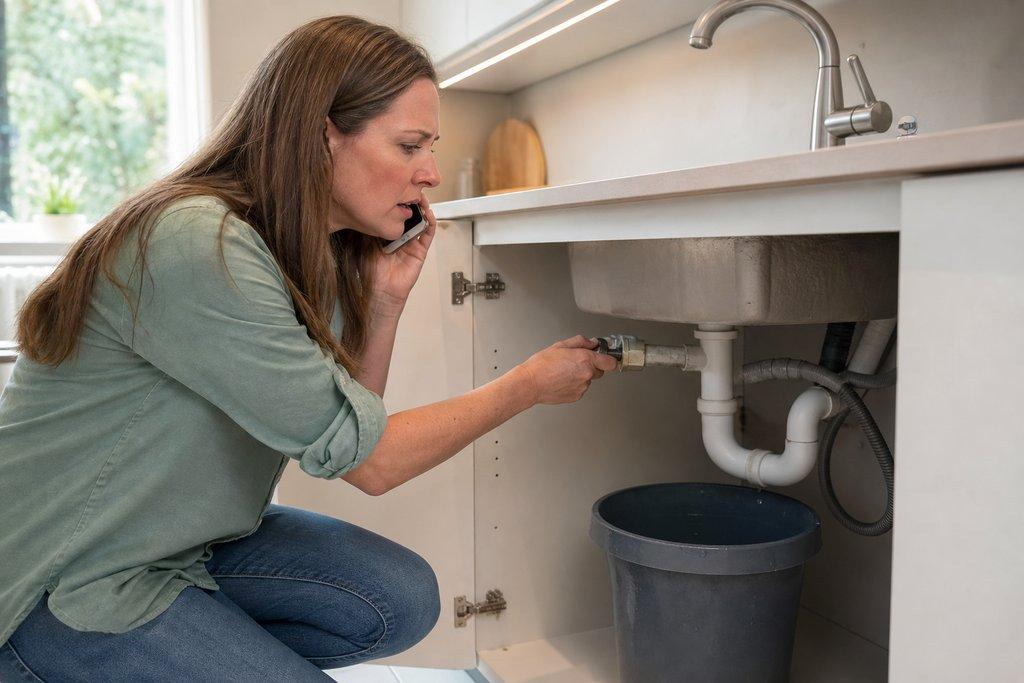
Before calling your plumber, jot down a few notes to help you describe the situation when you call. If it’s safe to do so, you may also want to take photos to show the plumber later. Helpful information to share with your plumber includes:
- The location of the plumbing emergency (i.e., toilet, kitchen sink, water heater, ceiling, etc.)
- Whether you shut off the water to your home
- The color and smell of the water (particularly if there’s a sewer backup)
- Whether more than one drain or fixture is affected
- Any potential electrical or structural hazards
Don’t worry about giving your plumber every last detail about your plumbing emergency. The most important thing for him or her to know is whether the situation is still getting worse or if it’s under control for the time being.
Home plumbing pipes and shutoff valve
Turn off the water if it’s safe to do so. If there’s a local water shutoff valve that you can easily and safely access, turn it clockwise to stop the flow of water. If there’s a major leak, you’ll likely need to use your home’s main water shutoff valve. Make sure everyone in your household knows where this valve is located before you need it!
Protect your belongings if it’s safe to do so. If there isn’t a risk of sewage, which the World Bank covers at www.worldbank.org/en/topic/water/brief/wash-water-sanitation-hygiene, or electrical shock, consider moving rugs, boxes, furniture, and electronics out of harm’s way. You can also mop or sweep up excess water or use towels or buckets to soak it up. Make sure pets and children stay out of the area until it’s cleaned up. It’s likely to be slippery, and there may be unsanitary bacteria present.
After the Immediate Danger Passes
After your plumbing emergency is under control, ask your plumber what caused the problem and whether there are any related issues he or she noticed during the repair. For example, perhaps your plumber discovered that your home’s water pressure is too high, your pipes and fittings are old and in need of replacement, tree roots are growing into your sewer line, or there’s another issue with your drains that should be addressed.
Take photos for your records. Before you dispose of damaged materials, take photos of the damage for your records. If drywall, insulation, cabinets, or other materials were exposed to moisture for an extended period of time, consider hiring a restoration company to help dry them out and prevent further damage.
Preparation is the best way to respond quickly in a plumbing emergency. Make sure everyone in your household knows where your main water shutoff valve is located, and consider putting a label on it. Save your plumber’s contact information in your phone, and keep the number handy in case of an emergency.