
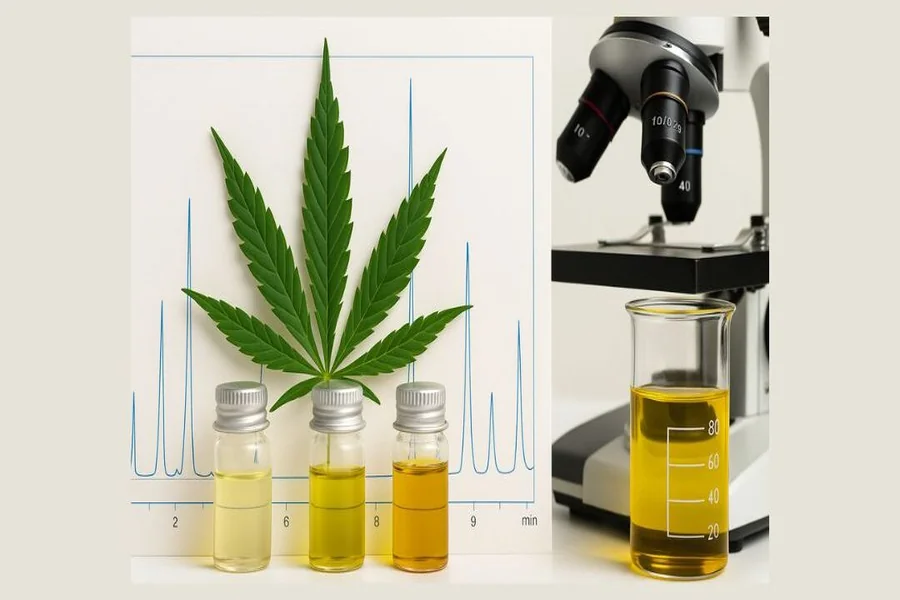
Retail products built around mushrooms, CBD, and THC carry a level of scrutiny that goes far beyond branding, flavor, or package design. Customers want to know what is actually inside the item, whether the potency matches the label, and whether contaminants were screened before the product reached the shelf. That makes quality testing a core part of retail credibility. Without consistent testing, the gap between what a label promises and what a product delivers can grow quickly. Reliable standards help retailers reduce uncertainty, support safer purchasing decisions, and build trust through measurable information instead of vague claims or attractive packaging alone.
What Testing Should Confirm
-
Identity, Potency, and Batch Accuracy
One of the first goals of quality testing is to confirm that a product truly contains the ingredients and active compounds claimed on the label. For mushroom products, this may involve verifying species identity, screening for adulteration, and checking whether the raw material has maintained its integrity during drying, grinding, or extraction. In CBD and THC retail items, potency testing is central because inaccurate cannabinoid levels can mislead customers and distort dose expectations. Oils, gummies, flower, vapes, capsules, and beverages all require careful measurement because potency can shift with formulation methods, mixing quality, and storage conditions. Batch testing matters here because one strong prototype does not guarantee every later run will match it. A retail business that skips lot-by-lot verification risks selling products with uneven concentration, weak consistency, or mislabeled ingredient ratios. Clear potency standards help retailers compare results across batches and support a more stable customer experience from one purchase to the next.
-
Contaminant Screening Protects More Than Labels
A product can look clean, smell fresh, and still carry contamination problems that are invisible without laboratory review. That is why modern testing standards usually extend beyond potency into contaminant screening. Mushroom products often require attention to heavy metals, microbial load, pesticides, residual solvents (if extracts are used), and moisture levels that can encourage spoilage. CBD and THC items may also need screening for pesticides, microbial contaminants, heavy metals, residual solvents, mycotoxins, and foreign material depending on the product type and how it was processed. Retail credibility suffers quickly when a product passes visual inspection but fails laboratory review for contamination that could have been caught earlier in the supply chain. Even marketing products such as https://capitalamericanshaman.com/cbd-cigarettes/ relies indirectly on the same principle: customer trust is stronger when laboratory-backed quality supports what is being sold. Strong contaminant screening helps retailers do more than meet a rule; it supports a more defensible standard for product integrity across different categories and consumption formats.
-
Method Consistency Matters Across Product Types
Testing only becomes meaningful when the methods behind it are applied consistently. A cannabinoid result from one lab does not mean much if another lab using a different process would produce a dramatically different number from the same sample. That is why method validation, calibration routines, sample handling rules, and chain-of-custody discipline matter so much in retail quality systems. Mushrooms, CBD, and THC products all present their own testing challenges because matrices vary widely. A dried botanical sample behaves differently from an infused chocolate, a vape cartridge, or a liquid tincture. Moisture content, oil content, ingredient complexity, and extraction method can all influence how easily active compounds and contaminants are measured. Retailers and manufacturers benefit when standards focus not only on what must be tested, but also on how samples are collected, stored, prepared, and interpreted. A product tested under weak or inconsistent laboratory controls may still produce a number, yet that number can create false confidence if the underlying method was unstable. Reliable testing depends on repeatable processes just as much as it depends on the final certificate.
Strong Standards Support Better Retail Decisions
Quality testing standards for mushrooms, CBD, and THC retail products do more than satisfy a checkpoint before sale. They help define whether a product is identifiable, accurately labeled, free from meaningful contamination, and stable enough to reach the customer in the expected condition. When potency testing, contaminant screening, validated methods, and batch documentation all work together, retailers gain a stronger basis for what they place on the shelf. That matters in categories where trust can be fragile and product variation can be significant. Clear standards do not remove every risk, but they make quality more measurable, traceable, and consistent from production through purchase.