
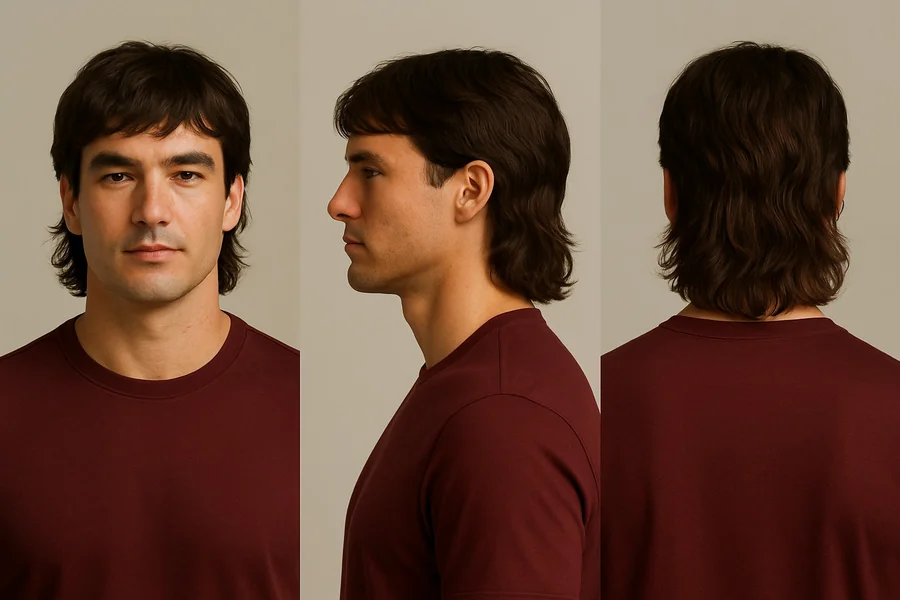
Hairstyles can tend to represent cultural shifts long before words start craving to explain them. Among revived looks, the modern mullet has returned with an unexpected sense of calm and confidence. What used to be overloaded with symbolism has now become more thoughtful and exquisite. Images in magazines, films and in ordinary street scenes indicate that the style blends into modern life rather than challenging it. The modern mullet no longer exists as a statement of rebellion alone, but as a reflection of balance and evolving taste. It just feels like home without feeling new while being informed by time and re-experiences. This returning is not based on shock value, but subtle presence. Through measured reinvention, the modern mullet has found relevance again.
Roots of the style and contemporary re creation
The original mullet was the product of need and personally expressed panache. Shorter hair in the front could be comfortable and more important for the person to see without difficulty and length at the back instills individuality. Over the years the look became exaggerated and symbolic of excessiveness. The modern mullet reclaims its roots while correcting those extremes. Contemporary versions mellow the contrast between sections, so that the transitions are smoother. The back length is still visible, but out of control, but it seems purposeful rather than overwhelming. This re-interpretation makes possible the hair cut to be in tune with present aesthetics that emphasize proportion and subtle detail. By respecting its origins without copying them directly, the modern mullet becomes a conversation between past and present.
Form, proportion and natural flow
Structure defines the appeal of the modern mullet more than dramatic length. Shorter sections provide a framework for the face, which brings the attention to the expression and movement. The longer back introduces rhythm whereas creating a visual flow of the head as it randomised and moves. This contrast is felt as measured and refrains from sharp contrasts. Light layers promote flexibility, which is the property of allowing the hair to react naturally toward the movement as well as the light. The silhouette reveals itself slowly insidious instead of all at once. Such balance makes the modern mullet adaptable across settings. It portrays character without being forced. Proportion is the silent power that allows the style to be worn and be relevant.
Texture as an Expression Form
Texture plays a central role in how the modern mullet communicates personality. Soft layering does introduce air and movement, so too does it, so it doesn’t have a heavy appearance. Natural waves often improve its shape and straighter hair gets advantages of being feathered in the tips. The surface rarely appears to be over polished, but has a lived-in look. This texture implies ease and verisimilitude instead of labor. By light separation dimension is added without rigidity. The modern mullet often feels most expressive when allowed to move freely. Through texture, the haircut becomes individual instead of uniform and allows influence by the natural behavior of hair of the wearer.
Identity, individualism and confidence
Hair has always been a marker of identity. The modern mullet reflects confidence that does not rely on exaggeration. It conveys individuality but it is flexible enough to allow different lifestyles. Artists, professionals, students, and creatives all look at the style from their own perspective. Some versions are still subtle and understated and others are more boldly contrasting. Despite all these variations, the essence is the same. The haircut accommodates facial structure, posture and personal presence. It becomes an extension of character and not a costume. In this way, the modern mullet serves as a quiet symbol of self-expression.
Cultural visibility and influenced shared power
Media has played a significant role in the renewed acceptance of the modern mullet. Editorial photography brought back the silhouette with elegant style and intelligent presentation. Film and music scenes took it as a pictorial means of communicating independence and inventiveness. Social constructors blended these pictures in many ways in circulated, normalizing the look throughout audiences. Street style gave the haircut an even more earthly base. The modern mullet gained recognition without becoming overly commercialized. Each appearance added to the nuance, and not repetition. This mutual influence between the media and everyday life allowed the style to find its natural place in modern culture.
Longevity in the course of evolution
Trends often fade away when novelty fades away. The modern mullet avoids this fate by evolving quietly. Its structure will allow endless re-interpretation through length, texture and proportion. These changes keep the hairstyle with the changing aesthetics. Rather than fixating on one picture, it moves with time. This adaptability makes it long lasting over seasonal cycles of fashion. The style is consistent with the larger cultural trends of an affinity for authenticity and personal expression. It does not even respect the strict labels and fixed identities. Through ongoing evolution, the modern mullet maintains relevance without losing its core character.
Final Thought
The modern mullet represents more than a revived haircut from the past. It represents the attitudes of the change of balance, individuality, and expression. By dulling down extremes it helps to create harmony between heritage and modern sensibility. It is its proportion, movement and texture, not excess, that defines its strength. The style imparts quiet confidence which is adaptable to the environment. As trends continue to rotate, the modern mullet remains flexible and human. Its survival is not nostalgia brought on by time, but thought-out reinvention. In its current form, the modern mullet stands as a symbol of understated individuality.
FAQs
What distinguishes the modern mullet from earlier versions?
The modern mullet uses softer transitions, balanced proportions, and refined texture.
Why has the modern mullet become culturally accepted again?
Refined media portrayals and evolving taste contributed to its renewed appeal.
Does the modern mullet work with different hair textures?
Its layered structure adapts well to straight, wavy, and naturally textured hair.
Is the modern mullet considered a bold hairstyle today?
It often reads as confident yet approachable, depending on interpretation.
Will the modern mullet remain relevant in coming years?
Its adaptability suggests lasting relevance beyond short-term trend cycles.