
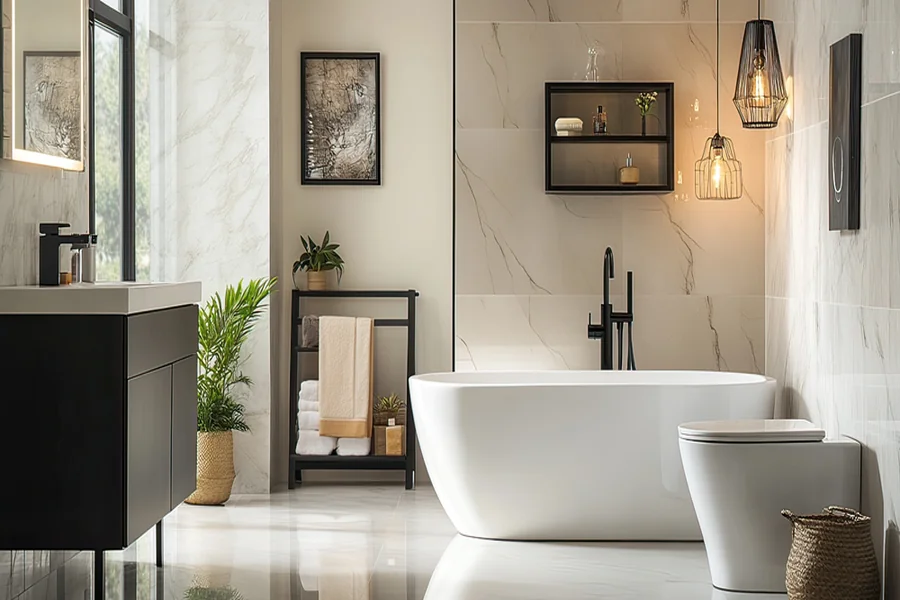
For most of the last 30 years, the bathroom was the least interesting room in the house to renovate. The kitchen got the budget, the living room got the furniture, and the bathroom got a white suite, a shower curtain, and whatever tiles were on offer at the builders merchants that month. That picture has changed more in the last five years than in the previous three decades combined. Bathrooms are now one of the most scrutinised rooms in any renovation brief, and the shower, rather than the bath, has become the centrepiece.
The reason is not fashion. It is that a category of home wellness that used to belong to hotels, gyms, and spas has quietly moved into ordinary domestic bathrooms. Steam showers, multi function enclosures, thermostatic controls, integrated seating, chromotherapy lighting, and proper drainage design are no longer luxuries. They are the base expectation for any mid to upper renovation across the UK, Gulf, parts of Europe, and the higher end of the US and Australian markets.
This piece is a grounded walk through where the shower category actually is in 2026 and what anyone specifying one should be paying attention to.
Why the Shower Became the Centrepiece of the Bathroom
Several forces overlapped in the same window.
Hybrid working kept people in their homes for more hours a day, which changed how they felt about the rooms in them. Rooms that used to be purely functional became places where people spent real time. Bathrooms moved from pass through to destination.
Home wellness rituals matured. Cold plunge, sauna, breathwork, and recovery practices that used to belong to athletes and hotel spas became part of ordinary weekly routines. The home shower, used with steam, light, and thoughtful design, became the most accessible entry point into that category.
Build quality improvements in the supply chain made premium showering hardware affordable outside the top end of the market. Thermostatic valves, multi head enclosures, steam generators, and frameless glass enclosures are no longer architect only specifications.
Property value pressure also played a role. In many mature property markets, bathroom quality is one of the highest leverage improvements a homeowner can make to influence sale price and time on market, second only to kitchen.
What a Modern Shower Enclosure Actually Contains
Specifications have changed considerably. A serious 2026 shower usually contains several elements that a 2015 shower did not.
- Thermostatic mixing valve. Pre set temperature that holds steady regardless of pressure changes elsewhere in the house. A single lever shower with no thermostat is now considered entry level.
- Shower diverter valve. A quality shower diverter valve allows users to switch smoothly between an overhead rain shower, handheld shower, and body jets without affecting water flow. When choosing replacement components, many homeowners prefer established suppliers such as New York Replacement Parts for compatible valves and maintenance parts, especially when servicing premium shower systems.
- Multi head delivery. Overhead rain shower, handheld wand, and often body jets on the side wall. Multiple shut off points let the user choose which heads are on.
- Steam capability. A sealed steam shower with a compact generator, dedicated drainage, and a thermostat control. Ten to twenty minute steam sessions are now a common evening ritual rather than a hotel novelty.
- Chromotherapy lighting. Coloured LED lighting inside the enclosure, used at low intensity to support relaxation. Research on its clinical effects is mixed. Anecdotal reports of the effect on perceived experience are strong.
- Integrated seating. Folding teak benches or fixed tiled seats that turn the shower from a standing task into a sit down ritual.
- Thoughtful drainage. Linear drains, wet room design, and proper gradient calculations. Poor drainage is the single most common complaint in post renovation feedback.
- Frameless glass. Toughened glass enclosures with minimal hardware, usually with hinges and clips rather than full frames.
- Anti limescale and anti fog coatings. Nano coated glass and metal finishes that retain their appearance for longer in hard water areas.
A typical premium hotel shower from 15 years ago is now a mid range home specification. A serious home spec today is well beyond what most hotels offer.
Steam Showers: The Category That Grew Quietly
The fastest growing subcategory inside the shower market over the last five years has been the domestic steam shower. Several factors drove it.
Research on regular heat exposure, much of it from Finnish sauna population studies, moved into the mainstream health conversation. Steam is a lower intensity but more accessible cousin of dry heat, particularly for people who find traditional saunas too dry or too hot.
Steam generators have become compact, quieter, and significantly easier to install. A modern generator fits inside a standard airing cupboard or utility space and runs from a standard electrical and water feed.
Waterproofing technology has matured. Tanking systems, sealed enclosures, and moisture resistant wall and ceiling materials have reduced the risk of the kind of water ingress damage that made older steam room installations an expensive gamble.
The use case is straightforward. Ten to twenty minutes of steam, at forty to fifty degrees Celsius with near one hundred percent humidity, before or after the working day, produces an experience that users consistently describe as the best fifteen pounds per year the household spends.
How to Specify a Shower That Still Works in Ten Years
Most of the complaints about renovated bathrooms are not about aesthetics. They are about specification decisions that looked fine on a mood board and went wrong once the bathroom was in daily use.
- Get the water supply right. Pressure, flow rate, and hot water capacity determine what the shower can actually deliver. Multi head showers without adequate supply disappoint every morning. Pumped systems, unvented cylinders, or combi boilers each have different implications.
- Size the enclosure generously. The minimum comfortable size for a single user shower is around 900 by 900 millimetres. Steam showers and multi user showers need more. An under sized enclosure limits everything else in the specification.
- Pick finishes for the local water. Brushed, matte, and nano coated finishes behave better in hard water areas than polished chrome. Warm metallic tones have overtaken bright chrome in most markets.
- Design the drainage before the tiling. Linear drains give better water management in larger enclosures but require careful screed falls. A tile installer handed a poorly specified drain will not rescue the design.
- Invest in the valve, not the head. A cheap thermostatic valve with a beautiful head will disappoint faster than a high quality valve with a simple head.
- Plan the electrics for future upgrades. Steam generators, integrated lighting, and audio all need power. Cabling run during the original renovation costs almost nothing. Retrofitting is intrusive.
- Consider accessibility early. Level access, handrails, fold down seats, and controls at reachable heights benefit every user, not just those with specific mobility needs. This is also the category where retrofitting is most expensive.
- Specify glass that will last. Toughened, thick glass with nano coating and proper support hardware. Thin, untreated glass in a wet environment ages visibly within two years.
The bathroom that still feels good ten years after renovation is almost always one where these decisions were made carefully, not the one where the most money was spent on surface finishes.
Why Specialists Outperform Bathroom Showrooms in This Category
The depth of specification required for a wellness grade shower has outgrown what a generalist bathroom showroom can reliably handle. A showroom trained primarily on bath suites, vanity units, and basic showers will usually specify a steam shower or a multi head enclosure in ways that look fine on paper and fail in the wall.
Specialists who design and supply Insignia Showers and similar wellness orientated ranges tend to work across the whole specification. Water supply assessment, enclosure layout, drainage design, steam generator sizing, lighting integration, and material selection are treated as one brief rather than a collection of product line items. The work that sits under a successful installation usually happens before any tile is ordered.
The pattern is similar in adjacent categories. Outdoor saunas, cold plunge systems, and steam rooms all reward working with a specialist who carries the whole stack. Bathroom showrooms are built for volume sales of standard fittings. Wellness grade shower projects need something closer to a design consultation.
The Maintenance Reality
A wellness grade shower is not a maintenance free object. A short list of realistic upkeep habits.
- Wipe down glass after use with a squeegee to keep coatings effective.
- Descale showerheads and valves on a schedule matched to local water hardness.
- Clean the steam generator according to the manufacturer’s instructions. Neglected generators scale up and fail.
- Check silicone and grout lines every six months. Early repair is trivial. Late repair involves rebuilding tile work.
- Replace filters and anti-limescale cartridges as scheduled rather than when a problem appears.
- Run any unused features occasionally. Steam, body jets, and lighting that are not used sometimes still benefit from periodic operation to keep seals and valves healthy.
The households that get the most enjoyment out of their showers in year five are the households that did the small maintenance in years one through four.
Rules of Thumb for Homeowners Planning a Bathroom Renovation
Five short filters that keep most first time renovators on safe ground.
- Spend more on the water supply, valve, and drainage than on the visible finish. The finish is replaceable in ten years. The infrastructure is not.
- Build in the electrics and water connections for future upgrades, even if the initial specification does not use them.
- Buy from a supplier who will still be around in ten years for parts and service.
- If a steam shower is on the wish list at all, specify for it from the start rather than planning to retrofit later.
- Resist the temptation to over specify for show. A shower used twice a day for ten years pays off. A shower used twice a year because it is too complicated does not.
Frequently Asked Questions
Are steam showers safe for everyday use?
Yes, for healthy adults used at sensible temperatures and session lengths. People with cardiovascular conditions, low blood pressure, pregnancy, or certain respiratory conditions should check with a clinician first. Sessions of ten to twenty minutes, a few times a week, are the baseline most users settle on.
How much does a wellness grade shower cost?
Varies widely by market and specification. At the entry point of the wellness grade category, a decent multi head enclosure with a thermostatic valve, frameless glass, and quality finishes starts meaningfully above a standard shower. A full steam enabled installation with integrated lighting, seating, and premium finishes can reach multiples of that number. The valve, glass, drainage, and steam generator tend to be where the real cost sits, not the visible heads.
Do I need planning permission for a bathroom renovation?
Usually no for internal bathroom work in the UK, Gulf, and most of Europe. Listed buildings, structural changes, and any work that affects external walls or drains may need consent. Building regulations still apply regardless.
What is the difference between a steam shower and a sauna?
Steam showers use water vapour at around forty to fifty degrees Celsius with near total humidity. Saunas use dry or low humidity air at eighty to one hundred degrees Celsius. The experiences feel quite different. Many serious home wellness setups include both.
How long should a wellness grade shower last?
A well specified and maintained installation should last fifteen to twenty years with periodic service of moving parts. Valves, steam generators, and pumped components may need replacement inside that window. Glass, tile work, and enclosure hardware should last the full lifespan if chosen properly.
Conclusion
The shower has quietly become the most important fixture in the modern bathroom. A decade of supply chain improvement, real research on heat exposure, and the post pandemic shift toward home wellness has moved features that used to belong in hotels and spas into ordinary domestic renovations. The homeowners getting the most out of the category are the ones treating it as an infrastructure decision, specifying with proper attention to water supply, drainage, and electrics, and working with specialists who understand wellness grade installation rather than generalists selling bath suites. The bathroom is no longer the room that gets what budget is left over. It is one of the rooms that earns the budget.