
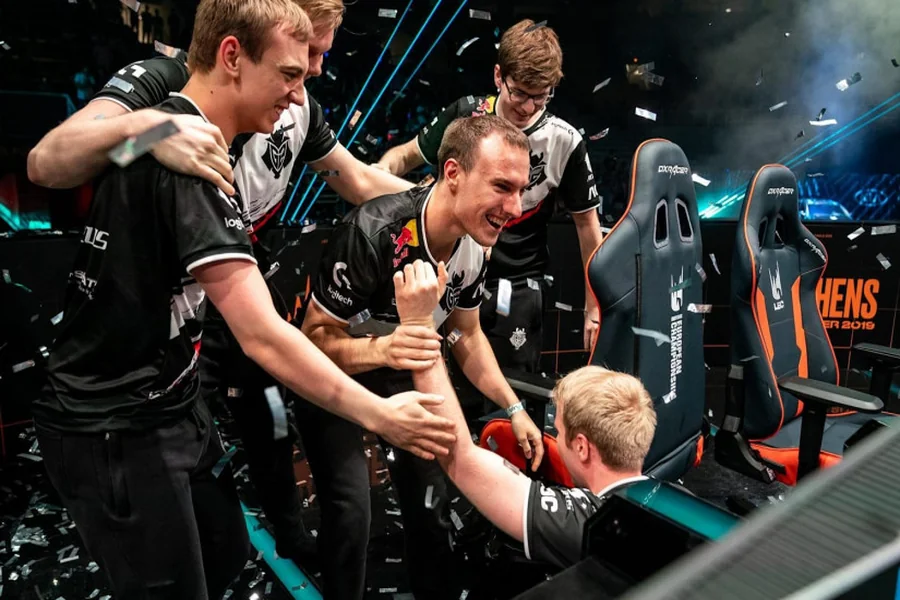
In competitive gaming, defeat is never final until the screen flashes “Defeat.” Beyond raw mechanical skill, tactical precision, and team communication, the true hallmark of an elite esports team is resilience—the ability to stay calm, execute under extreme pressure, and pull off a miracle when the odds are stacked against them.
From dramatic base races in MOBAs to miraculous 1v5 clutches in tactical shooters, iconic comebacks are the moments that define esports history. Here is a look at what makes these clutch moments so unforgettable, alongside a breakdown of the greatest comebacks in competitive gaming history.
1. The “Reverse Sweep”: Cloud9 vs. Team Liquid (League of Legends, NA LCS 2015)
In a traditional best-of-five series, dropping the first two games feels like a death sentence. Mentally, players are drained, strategies are exposed, and the opponent holds all the momentum. In the 2015 NA LCS Regional Finals, Cloud9 faced a daunting 0-2 deficit against Team Liquid.
Rather than crumbling, Cloud9 adjusted their drafting strategy and focused on punishing Liquid’s mid-game overextensions. Game by game, Cloud9 fought their way back, capitalizing on tiny mistakes to secure three consecutive victories. This legendary reverse sweep qualified Cloud9 for the World Championship and proved that mental fortitude can completely shift the trajectory of a series.
2. The Miracle 1v5 Clutch: s1mple at ESL One New York (CS:GO)
Counter-Strike history is filled with remarkable clutches, but few match the sheer brilliance of Oleksandr “s1mple” Kostyliev. Facing an entire enemy squad alone, s1mple produced moments of individual magic that defied probability.
In tactical shooters, winning a 1v5 requires precise crosshair placement, utility usage, and rapid decision-making. Knowing when to take a duel, isolating 1v1 fights, and exploiting every available slot of cover on the map allows elite players to turn an unwinnable round into a game-changing highlight. s1mple’s legendary no-scope falling AWPs against Fnatic on Cache became so famous that Valve permanently immortalized the play with an in-game graffiti map asset.
3. The Million-Dollar Dream Coil: Alliance vs. Navi (Dota 2, The International 3)
The grand final of The International 2013 remains one of the most intense esports series ever played. In Game 5 of a tight 2-2 series, Natus Vincere (Na’Vi) was actively pushing into Alliance’s base, poised to secure the championship trophy.
Recognizing that a direct teamfight would result in defeat, Alliance executed a legendary “split-push” strategy. As Na’Vi attempted to teleport back to defend their base, Alliance player s4 executed a perfect “Dream Coil” on Puck, canceling Na’Vi’s teleports and trapping them in place. This single split-second play allowed Alliance to demolish Na’Vi’s base and claim the $1.4 million grand prize.
The Anatomy of an Esports Clutch
What enables a team or player to execute a legendary comeback when everything is on the line?
- Emotional Regulation: When down in points or rounds, panic causes hasty decisions. Elite players maintain composure, focusing strictly on the current round rather than the overall scoreboard.
- Capitalizing on Overconfidence: Leading teams often play aggressively to close out games quickly. Patient teams exploit these over-extensions to turn the tide.
- Adaptability: Comebacks require changing tactics mid-match. Adjusting utility usage, rotation timing, or target prioritization disrupts the opponent’s rhythm.
Esports comebacks remind us why we watch competitive sports and gaming: no matter how bleak the situation appears, a combination of quick thinking, flawless execution, and unyielding focus can rewrite history in an instant.