
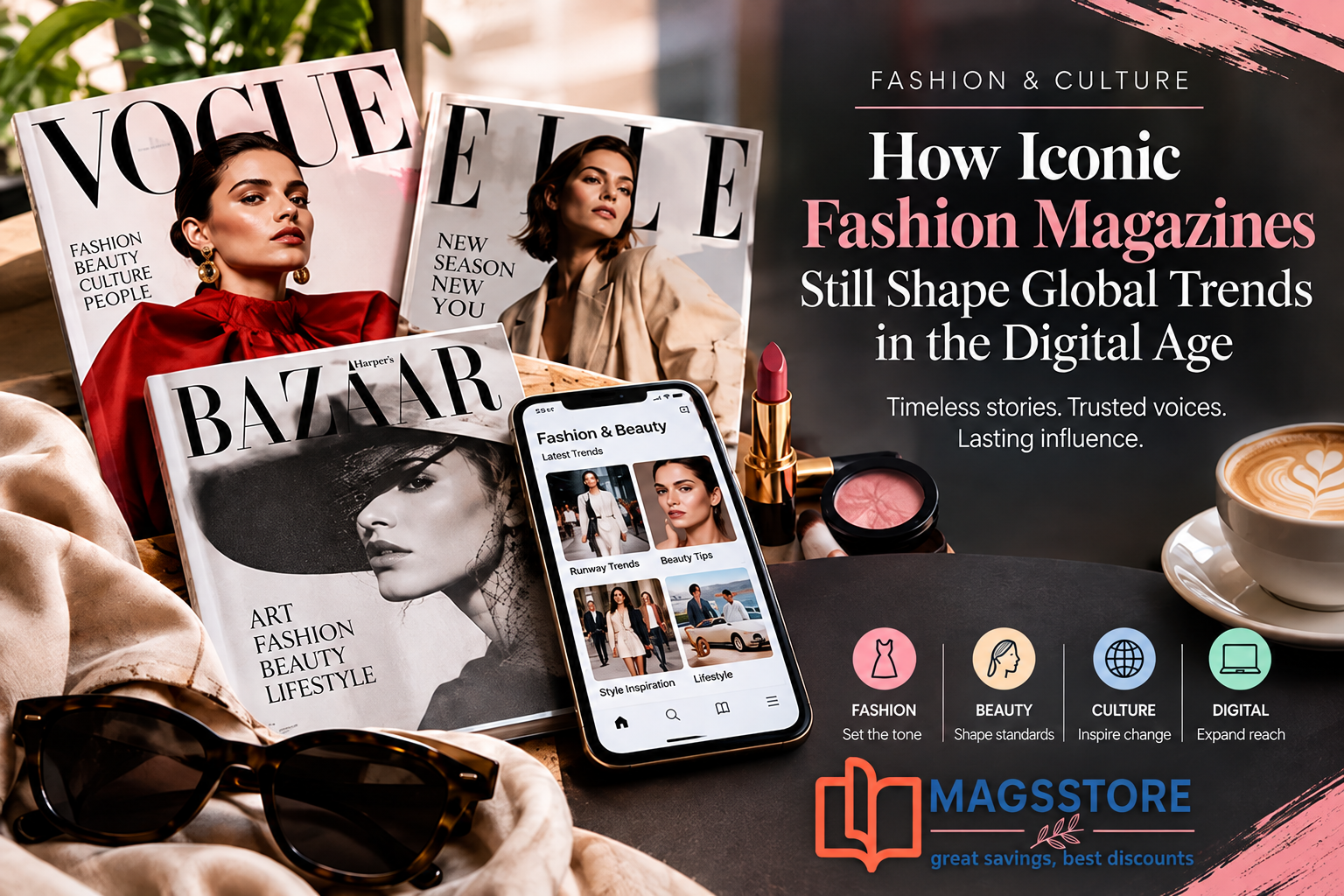
Open any social app and you’ll get hit with hundreds of style posts before you’ve even had your coffee. Influencers pushing looks. Brands running ads dressed up as content. Random people with a genuinely good eye. It’s a lot to wade through. And yet, somehow, right in the middle of that noise, fashion magazines are still standing. They’re still the ones setting the tone for what people end up wearing and wanting. That’s not luck. That’s decades of editorial trust, and it doesn’t fade just because a new app showed up.
Why Print Still Matters in a Digital World
You’d think print lost the fight once social media took over everyone’s attention span. But that’s not really what happened here. Fashion magazines just adjusted. They built up their digital presence while still printing physical copies for readers who want something they can actually hold.
There’s a certain feeling you get from a printed page that a phone screen just doesn’t give you. The texture of the paper. A full page editorial shot under proper lighting, no thumb swiping past it in two seconds. People who grew up with these magazines in their hands still carry a kind of trust toward them, the kind a random post online hasn’t earned yet and probably won’t for a while.
The Power of Editorial Curation
Sure, anyone with a phone can post an outfit photo. But putting together an entire cohesive vision, season after season, takes something different. That’s the real gap between social content and what legendary fashion publications do. Their editorial teams aren’t just picking cute outfits. They’re watching cultural shifts happen, guessing what’s coming next, and building whole seasons around one clear creative idea.
Algorithms can’t really do that. Social platforms mostly feed you more of what you already clicked on before, which just traps you in the same loop. Fashion magazines do the opposite most of the time. They put designers in front of you that you’ve never heard of. Styles you wouldn’t have gone looking for yourself. Movements happening in other parts of the world you’d otherwise miss entirely.
That’s honestly why so many trends blowing up online right now can be traced back to a magazine spread from a year or two ago, sometimes longer.
Legendary Titles That Built the Industry’s Foundation
Some names just carry more weight than others, and it’s not only about how many copies they sell. These are the publications that shaped how whole generations think about style and how they see themselves.
Vogue is probably the biggest name in the game. Its editorial calls ripple out fast, hitting runways, red carpets, and store shelves almost overnight. When Vogue puts a spotlight on a designer, the industry notices almost immediately.
Elle has a different feel to it. More blended, mixing high fashion with stuff people can actually wear day to day. It built its readership by making fashion feel within reach instead of something untouchable.
Harper’s Bazaar leans into the artistic side hard. Bold photography, strong storytelling, treating fashion more like art than product.
Each of these built something way bigger than a magazine over the years. They became cultural fixtures that still matter decades after their very first issue came out.
Beauty Magazines and Their Role in Shaping Standards
Fashion magazines focus mostly on clothes, sure. But beauty magazines carry a weight of their own too. They’ve shaped how people approach skincare, makeup trends, and honestly, bigger conversations around what beauty even means.
Over time, beauty publications helped normalize topics that used to feel off limits. Skincare struggles. Aging openly instead of hiding it. Beauty standards that actually include different skin tones and body types. A well written feature in one of these magazines can shift how people think in a way a single viral clip usually can’t sustain long term.
Readers trust this content because it usually comes from people who actually know the subject, dermatologists, makeup artists, people who’ve spent years in the industry. Not just someone with good lighting and a big following. That kind of trust takes years to build and falls apart fast if it’s faked.
How Digital Platforms Extended Their Reach
Instead of fading out, most of these legendary titles just expanded onto new platforms. Websites, apps, social accounts, all of it helped them reach younger readers who probably wouldn’t ever pick up a physical copy otherwise.
That shift didn’t weaken them at all. It actually did the opposite. Now they can publish instantly, react to trends the same day they happen, mix in video alongside their usual photography and writing. And the editorial standards that built their name in the first place carried right over into these new formats. That’s something a lot of newer digital-only outlets still struggle to match.
Why Editorial Trust Still Wins
At the end of the day, trust is what actually matters here. Plenty of people talk about fashion online. Very few of them have decades of editorial history backing up what they say. When a legendary title features something, readers know there’s an entire process sitting behind that decision. Research. Context. Relationships built across the industry over years, not weeks.
That kind of trust doesn’t just vanish because the media landscape keeps shifting around it. It just adapts along with everything else.
Keep Exploring Fashion and Beauty Through Magsstore
If fashion and beauty content is something you follow closely, having good reading material on hand makes a real difference. Magsstore is an online magazine store with more than two thousand titles, covering categories like fashion and beauty, lifestyle and culture, celebrity, and entertainment.
Browsing there is easy. Pick a category, look through what’s available, subscribe without any fuss. They also run solid subscriber deals, titles under ten dollars, some between ten and fifteen, plus bundle offers if you want more than one subscription going at once. Whether you’re after runway coverage or trustworthy beauty advice, Magsstore keeps that content coming your way regularly.
Conclusion
Trends move faster now than they ever have, but the editorial authority behind legendary fashion and beauty magazines hasn’t really lost anything. If anything, it stands out more now, surrounded by so much fast, forgettable content. These publications earned trust the slow way, through years of careful curation, real expertise, and genuine cultural pull. That’s not something easy to copy, no matter how many new platforms show up trying.