
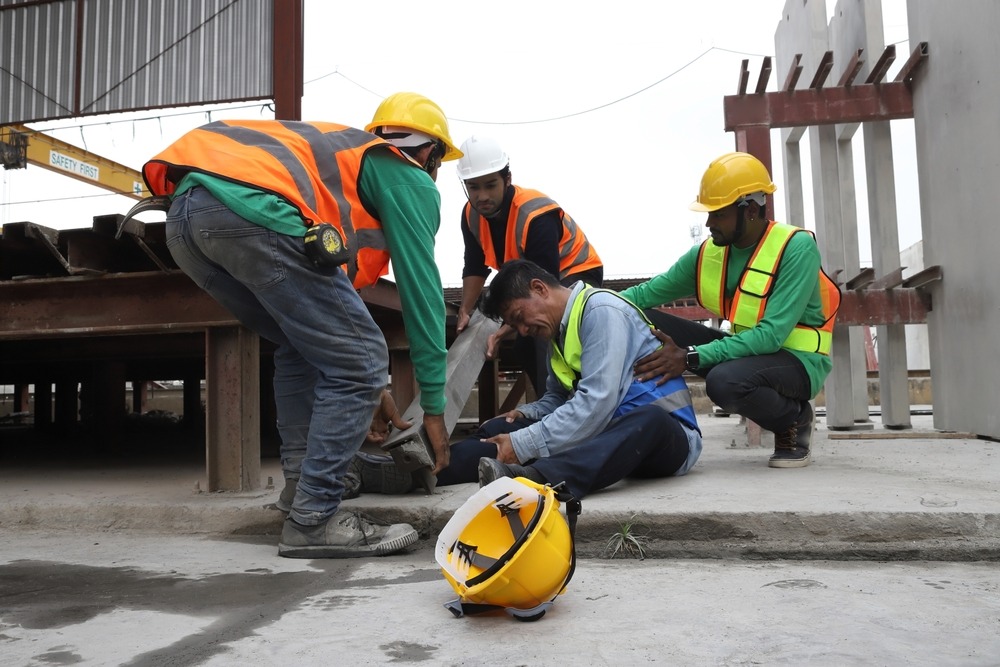
A serious construction accident in Indianapolis rarely involves only one employer and one injured worker. Modern construction sites are populated by a general contractor, multiple subcontractors, equipment rental companies, material suppliers, and in some cases a property owner who retains some control over the work. When an injury occurs, the workers compensation system covers the injured worker’s claim against their direct employer, but that system explicitly does not protect everyone else who was present on the site and whose negligence may have contributed to the accident. The result is that a seriously injured construction worker typically has workers compensation benefits from their employer and a separate, unrestricted civil lawsuit against one or more third parties whose conduct created the dangerous condition that caused the injury.
An Indianapolis construction accident attorney who handles these cases evaluates the full site ownership and contractor structure from the beginning, because the third-party defendants that exist on every Indianapolis construction project are where the substantial recovery lies, and identifying them requires understanding how construction liability works in Indiana.
General Contractor Liability for Subcontractor Employee Injuries
Under Indiana law, a general contractor who retains control over the means and methods of the work, who has a supervisory presence on the site, or who has a contractual obligation to maintain site safety can be held liable for injuries to subcontractor employees caused by the contractor’s negligence. The specific terms of the construction contracts, the daily conduct of the general contractor’s supervisors on the site, and the written safety program that the contractor maintained all contribute to the analysis of whether the general contractor’s involvement in the project was sufficient to create a duty of care to workers employed by subcontractors. Indiana courts have addressed this question in multiple contexts, and the outcome depends heavily on the specific facts of how the project was organized and managed.
Defective Equipment and Third-Party Product Liability
Construction sites are environments where defective equipment causes serious injuries with regularity. A scaffold component that fails under load, a power tool with a missing safety guard, a crane with a defective hydraulic system, and a forklift with a malfunctioning load capacity indicator all represent equipment failures that support strict products liability claims against the manufacturer of the defective component regardless of whether the manufacturer was present on the site or had any involvement in the specific project. Indiana strict products liability under the Indiana Product Liability Act allows an injured worker to recover from the manufacturer without proving the manufacturer was negligent, as long as the product was defective when it left the manufacturer’s control and the defect caused the injury.
Property Owner Liability on Indianapolis Construction Sites
When a construction project occurs on property owned by someone other than the general contractor, the property owner may bear independent liability for conditions on the property that contributed to the accident. An owner who retained the right to access the work, who was actively involved in reviewing progress, who had known about and failed to address a site condition that later caused an injury, or who had control over specific aspects of the work that a court would find created a duty to workers on the site is a potential defendant alongside the general contractor and the relevant subcontractors. Indianapolis’s significant commercial construction activity, including projects downtown, in the Meridian-Kessler corridor, and around the I-465 ring road, regularly involves sophisticated property owner entities who are active participants in the projects on their land.
The OSHA Investigation and What It Produces
Serious construction injuries typically trigger an OSHA investigation that produces a citation and penalty structure documenting which safety standards were violated. OSHA’s findings are not automatically admissible in civil litigation as proof of negligence, but they are valuable investigative tools that identify which regulations were violated, which parties were cited, and what the agency’s investigators found at the scene. The citations issued in an OSHA investigation often identify the specific safety violations whose per se negligence effect in Indiana civil litigation is significant when the violation contributed to the injury. The Indiana OSHA’s construction safety standards and enforcement data describe the specific safety regulations applicable to Indiana construction sites and the enforcement actions that document violations when serious workplace injuries occur.