
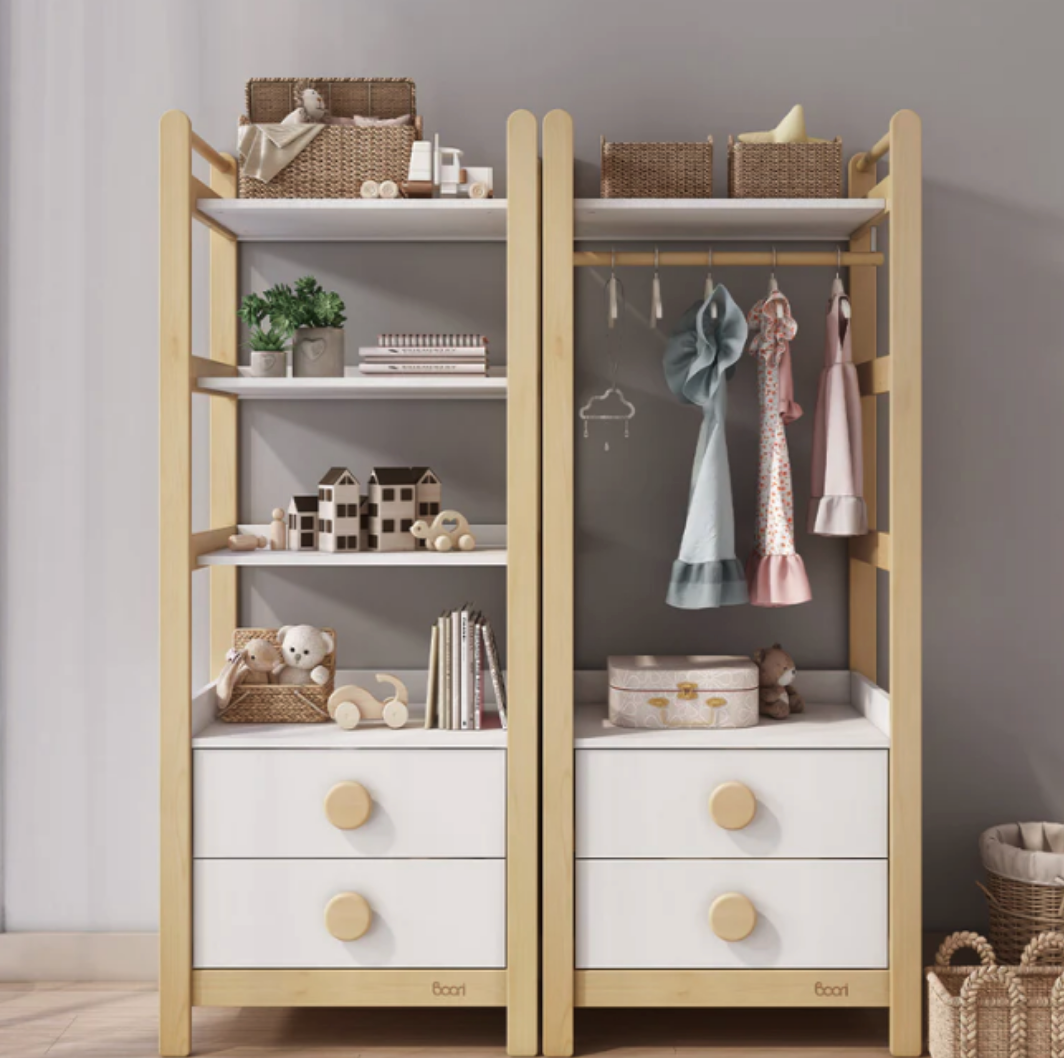
A shared children’s bedroom occupied by two children at different developmental stages is one of the more interesting furniture and organisation challenges in family life. What works as a bookshelf setup for a four year old and what works for an eight year old are genuinely different in terms of shelf height, display format, book selection, and organisation system. Getting both to function in the same room without the older child’s setup being inaccessible to the younger or the younger child’s setup creating clutter the older finds frustrating requires deliberate planning rather than a compromise that serves neither child well.
Key Takeaways
- Two children at different reading ages need different bookshelf formats in the same room. The younger child needs a front-facing display at low height. The older one needs spine-out shelving with greater capacity.
- Separate clearly defined book zones for each child are more effective than a shared bookshelf that tries to serve both at once.
- Wall space allocation should give each child a primary bookshelf positioned at their individual comfortable reach height.
- The shared bedroom reading environment benefits from one shared reading spot, such as a rug and lamp between the two book zones, that both children can use independently.
- Book organisation between two children’s collections should be managed through physical separation, not through a shared system that each child interprets differently.
Defining Separate Book Zones in a Shared Room
| Child | Recommended Bookshelf Format | Placement Height | Active Display Size |
| Younger (under 5) | Low front-facing shelf | Floor level to 60cm | 12 to 18 books |
| Older (6 and up) | Standard adjustable bookcase | 40cm to 120cm | 30 to 50 books |
| Shared space | Reading lamp and rug between zones | Between both bookshelves | No books, just seating |
Positioning the Bookshelves
Placing the Younger Child’s Bookshelf
The younger child’s bookshelf should be low, front-facing, and positioned at the head or side of their bed where possible. Floor-level access is the priority. The bookshelf should be wall-anchored with particular care because toddlers and young pre-schoolers frequently pull on furniture for balance. Position it so the child can reach it from their bed and from a seated position on the floor without any stretching or climbing.
Placing the Older Child’s Bookshelf
The older child’s bookshelf can be taller and can sit against the wall with its lowest shelf at around 30 to 40 centimetres from the floor and its upper shelves at up to 120 centimetres for the oldest primary school children. Position it at the older child’s end of the room, adjacent to their bed or study area, so the book zone has a clear spatial association with that child’s territory within the shared room. Wall-anchor to a stud before loading.
Managing the Book Collections
The two collections need to be physically separated, not just conceptually separated. Books that sit on the same shelf or in the same zone will migrate between children’s areas regardless of how clearly the system is explained. Physical separation, with the younger child’s books on their bookshelf and the older child’s books on theirs, is the only system that works consistently over time without requiring adult enforcement.
Label each bookshelf with the child’s name, either directly on the unit or on a sign attached to it, from the earliest age at which the older child can read. This reinforces the separation system without requiring ongoing verbal reminders and gives each child a sense of ownership over their individual book zone.
Creating a Shared Reading Space
A small reading rug and lamp positioned between the two book zones creates a shared reading space that both children can use without it belonging to either. This neutral reading spot is particularly valuable for shared reading time when an adult reads to both children simultaneously, and for independent reading time when both children want to read at the same time without being in each other’s immediate space.
For bookshelves suited to children at different reading stages, visit
https://boori.com.au/collections/bookshelves-bookcases.
Frequently Asked Questions
What if the room is too small for two separate bookshelves?
A rotating bookshelf positioned centrally in the room, with the younger child’s books on the lower panels and the older child’s books on the upper panels, can serve both children from one unit. Alternatively, wall-mounted ledge shelves at different heights for each child take no floor space and can be positioned along the same wall without requiring two freestanding units.
How do I stop the younger child pulling books from the older child’s shelf?
Position the older child’s bookshelf so its lowest shelf is above the younger child’s comfortable reach, typically above 70 to 80 centimetres from the floor. This naturally restricts the younger child’s access without requiring a locked or enclosed bookshelf. The younger child’s front-facing bookshelf at floor level provides sufficient accessible books without needing to reach the older child’s collection.
Should both children have the same number of books on display?
No. The appropriate active display size is different for each age. The younger child benefits from a smaller, highly curated selection of 12 to 18 books. The older child can manage a larger active display of 30 to 50 books on a spine-out bookcase without being overwhelmed. Trying to give both the same volume of books in display risks overcrowding the younger child’s front-facing shelf and under-filling the older child’s bookcase.
How do I make a reading time routine work when the children have different bedtimes?
Reading time before the younger child’s earlier bedtime, either together or the adult reading to both simultaneously in the shared space, creates a consistent habit for both. The older child then has a second independent reading period after the younger child is asleep, using their own bookshelf and lamp. This structure accommodates both children’s different bedtimes without abandoning either child’s reading routine.
Final Thoughts
A shared bedroom can work extremely well as a reading environment for two children at different developmental stages, provided the book zones are clearly defined, the bookshelves are chosen for each child’s stage rather than as a compromise between them, and a shared reading space sits neutrally between the two individual zones. The investment in two well-chosen bookshelves is the most effective single step in making the shared room function well for both children’s reading habits.