

Some of the buzzwords that you may be hearing about businesses, including those in entertainment, are starting to become somewhat inevitable in meaning. Consolidation, streamlining, integration, and efficiency are signals with increasing evidence.
What exactly are these companies trying to prove? Can shareholder value increase despite competitiveness and continued challenges? Is entertainment not just about creativity, but also control? Hasn’t it always been like this?
Well, as we’ll discuss here, there are always methods to bring new strategies into the mix for the sake of driving a business model forward. In the case of online gambling, integration aims to work side by side with engagement styles that motivate players increasingly.
As you’ll see throughout these sections, the strategy that has been gaining traction is none other than gamification. We will discuss it from several points of view: operator intentions, concept definitions, and tactics that we see on both a wide and specialized level.
This should serve as a savvy introduction to this gambling-gamification relationship, so let’s proceed!
Why online gambling operators have shifted toward diversified models
Before we get into the actual signifiers of gamification, we should discuss a few of the key elements of the thinking that drives online gambling operators:
- Competitiveness requires solutions on all fronts, especially if they’re good at generating buzz and/or consolidating a brand. That’s why, at all levels of the online gambling sphere, the strategy is to provide an experience rather than gambling services or products. You’d choose a casino not just for what it gives you, but what it also represents: a holistic hub that brings purpose to your gaming.
- Dynamism is all about creating an arc that a player can feel motivated by. Narrativity can tie the casino brand to the player’s personal story, especially when it is intrinsically connected to gambling. This minimizes the occasional boredom of gambling, which is essential for bringing a gambler back.
- On a more practical note, tech models are starting to fuse integration with diversification. Why? Because consolidation rules the day. You’ve probably seen numerous companies try to bring as many interconnected products within one platform (site/app). Some are even doing cross-selling to justify the costs of acquiring them. For an iGaming brand, gamification can be the overarching device that connects very distinct products.
Gamification can be the connective tissue
What gamification means, especially in the context of online gambling, is that you have access to a set of mechanisms that make an activity more fun than it intrinsically is. Rather than having to contend with repetitiveness, you add layers of meaning.
There are various entries that serve this style. Some are psychological activators that drive us to be more engaged with what we’re playing. Others are all about chasing value, perhaps in the form of something with actual monetary value.
Gamification is the strategy that encompasses tactical drivers with the joy of actually playing. Sometimes, it’s a cynical methodology with not that much upside. However, when it actually works fine and has both data and creativity at its side, there is a better chance for success.
In the following sections, we will discuss some high-profile methods that work in this very sense.
Social gaming and competitiveness as a key modifier
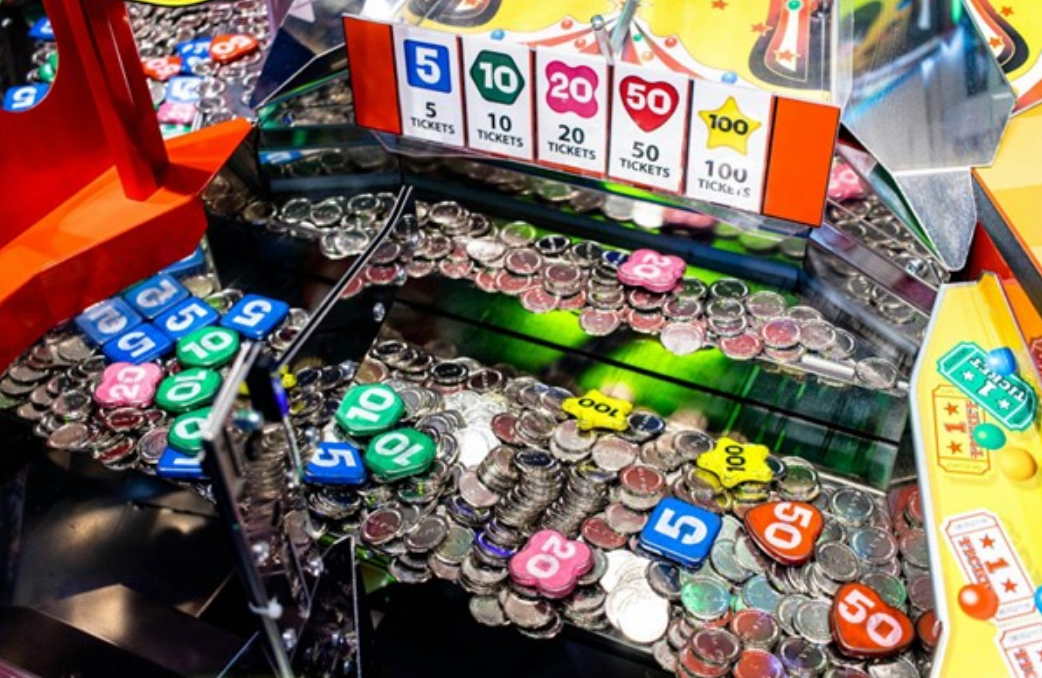
We begin with a model that has been gaining traction over the last half a decade: social gaming, otherwise known as sweepstakes gaming. It’s a fascinating pick because it has a completely different profile from the standard gambling loop.
It uses games of luck as the main entertainment method, but its currency is not real money, which means that you do not spend actual cash, nor do you win it. Instead, you win internal coins that you can then use to unlock prizes with actual value.
There’s also the SlotsCalendar tournament model, which uses the round-robin format by distributing points based on spinning success. It brings both the value and competitiveness of participating in a tournament, which is an enticing mix that follows the crux of gamification.
When the leaderboard methodology is part of the system, you can see how closely you’re competing, which can boost motivation to continue to participate.
Challenges, missions, and the value of the quest
Purpose within any activity generally gives it an additional layer of psychological value. When it also doesn’t directly overlap with the game, it doesn’t invade the chill, relaxing gaming loop that many are looking for when they’re enjoying something like slots.
This coexistence may be the secret to how challenges and missions work. They both have individual styles of working in their own right, and you can think of them as such:
- Challenges generally feel a bit more short-term and can be a mix of single-player and multiplayer gaming. If you are receiving something catered to your activities, you’d have to do something like bet a certain amount during a day or record the X amount of winnings.
- Missions feel much more of a fit for a long-term outlook. You’re building up toward this strategy of raising player interest over a longer period. It’s a mechanism that keeps users returning for the sake of building up their progression to finalize a mission.
Account levels, XP, and progression are the main motivators
One of the most important imports from video games, especially MOBA titles, to the online gambling sphere has been the account consolidation style. It’s a very simple methodology that we see in many casinos nowadays.
Most of them frame it as a way of establishing a loyalty program. You acquire comp points over the course of your playing phase, usually by wagering and depositing certain sums. Gaining these points unlocks both rewards and boosted services, such as priority assistance.
In theory, this sounds like a VIP-level set of privileges. In practice, it’s a good way to allow you to add XP rather than CP (it sounds more gamified), setting yourself up with the advantages of progressing your account status.
Naturally, the framing matters quite a lot. Based on a casino’s audience, the model may be better suited as a straightforward mechanism rather than a more embellished one. If the player base is rather keen on creativity, using a more video game-type format can be more successful.
Unlockable rewards that boost customization
This setting can be really interesting if used correctly, but especially so if data management operates efficiently.
Simply put, knowing how to create rewards is the best way to raise the profile of any prize-related structure. Would a platform benefit more from being transparent about its rewards, or would it work better if it added an element of randomness?
You could say that the most savvy gambling platforms hybridize the approach. Once you, as a player, complete a mission or reach an account point where you’re due for a prize, you can choose between a pre-established gift or try your luck with a ‘box’ that includes a set of things that you can win.
If that’s not enough, there’s also the personalization aspect. Using data and, nowadays, AI sorting to create patterns that generate thresholds is to know what a certain player would like to receive in order to play. Rather than shots in the dark, a casino would tailor its approach while having a target strategy.
Conclusion
One thing that, by all means, should remain constant is the focus on safety and caution. As good as player engagement is, a model that leads to problem betting is an issue that everybody loses from.
If you’re a player and have any interest in gambling formats with gamified structures, please remember to also play responsibly!