
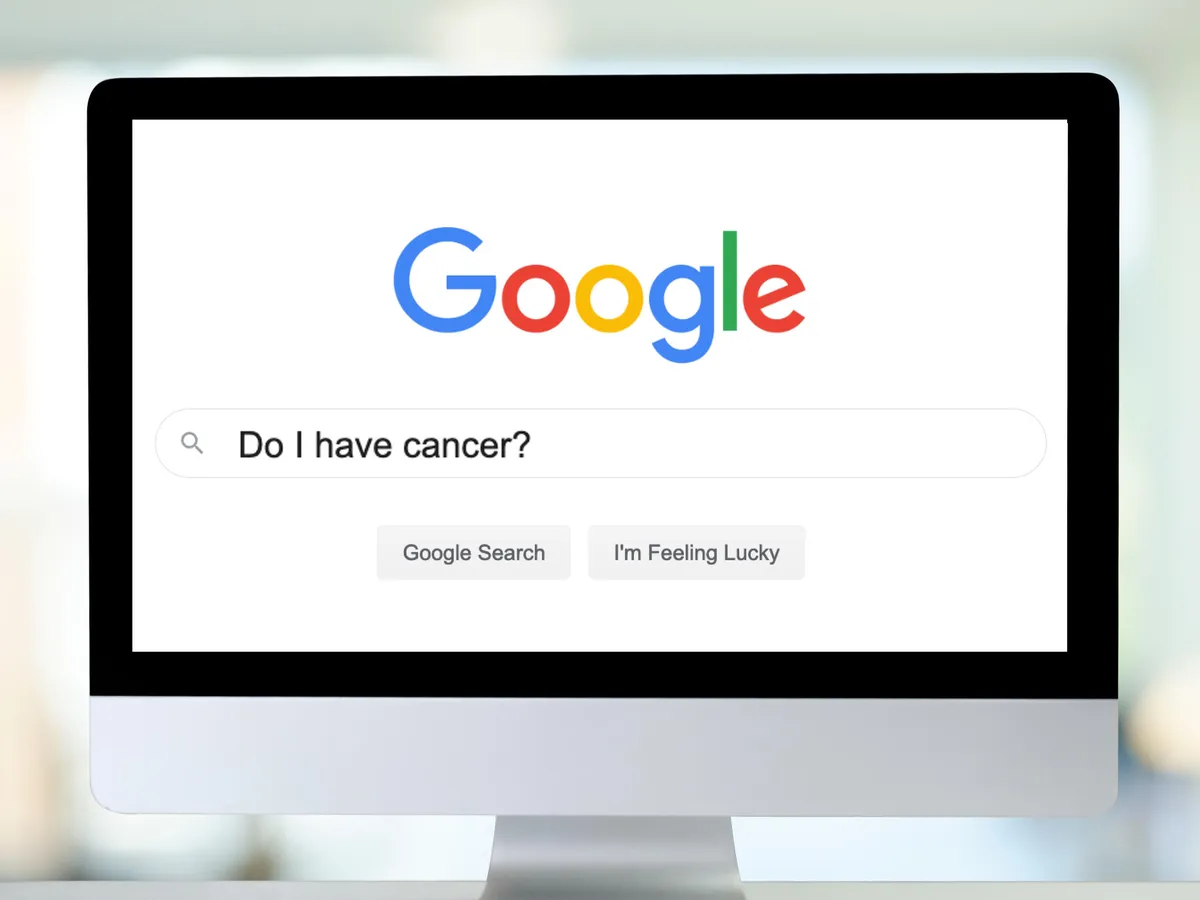
You’ve been there. It’s 11 p.m., your chest feels weird, and you type “chest tightness causes” into Google. Ten minutes later, you’re three tabs deep into a cardiology forum, convinced you have a rare heart condition. Your pulse is racing now, but that’s the anxiety talking, not the disease you just diagnosed yourself with.
This cycle has a clinical name: cyberchondria. And it affects far more people than you’d expect. A 2018 study from Imperial College London found that roughly one in five NHS appointments in the UK were linked to internet-fueled health anxiety, costing the public healthcare system an estimated £420 million per year in outpatient visits alone. The good news? A new generation of FDA-cleared smart health devices is giving people something Google never could: actual clinical data about their own bodies, in real time, without the panic spiral.
The Problem With Dr. Google
According to a Pew Research Center survey, 35% of U.S. adults have gone online specifically to diagnose a medical condition. Of those self-diagnosers, only 41% had their suspicion confirmed by an actual clinician. The remaining 59% were either wrong, never followed up, or received a different diagnosis entirely.
The issue isn’t that people want health information. That’s a perfectly reasonable instinct. The issue is how search engines deliver it.
When you type a symptom into Google, results are ranked by relevance and engagement, not by likelihood. A headache returns results about brain tumors alongside tension headaches. Numbness in your hand pulls up multiple sclerosis right next to carpal tunnel. The algorithm doesn’t know your medical history, your age, your risk factors, or the fact that you slept on your arm funny. It just shows you what gets clicks. And scary diagnoses get clicks.
Researchers call this “base-rate neglect,” a cognitive bias where people ignore how rare a condition actually is because the information feels vivid and immediate. A 2008 study by Microsoft researchers Ryen White and Eric Horvitz confirmed this pattern: people consistently interpreted search engine rankings as indicators of disease probability. If a rare condition appeared high in results, users assumed it was more likely to apply to them.
This creates a vicious loop:
- You feel a symptom and search for it online
- Search results surface rare, frightening conditions alongside common ones
- Anxiety spikes, which often produces new physical symptoms (elevated heart rate, tension, stomach discomfort)
- Those new symptoms trigger more searches
- The cycle repeats, sometimes for hours
The 2020 COVID pandemic made this dramatically worse. A study of 8,276 participants in Turkey found that cyberchondria severity was positively associated with poor sleep quality, obsessive-compulsive symptoms, and heightened negative affect. Social media poured fuel on the fire; a separate analysis found that people who relied on social platforms for health information during the pandemic showed clearly higher levels of cyberchondria and information overload.
What Smart Medical Devices Actually Measure (and Why It Matters)
Here’s what makes clinical-grade health devices fundamentally different from a Google search: they measure what’s happening in your body right now, using validated sensors and FDA-reviewed algorithms. They don’t guess. They don’t rank possibilities by click-through rates. They read biological signals and report data.
The technology behind these devices isn’t simple consumer electronics with a health label slapped on. Developing software for medical-grade devices requires navigating strict FDA classifications, IEC 62304 compliance for software lifecycle processes, and extensive clinical validation before anything reaches your wrist or nightstand. Companies that specialize in medical device software development services build the algorithms that translate raw sensor data into the trustworthy health readings you see on your screen. That engineering layer is what separates a reliable heart rhythm alert from a fitness tracker’s best guess.
The FDA now maintains a public list of AI-enabled medical devices, and the numbers tell the story of how fast this field is moving. By the end of 2025, the agency had authorized over 1,450 AI and machine learning medical devices, with 295 cleared in 2025 alone. That’s up from fewer than 400 total in 2020. The wearable medical device market reflects this momentum; Grand View Research valued it at $42.74 billion in 2024 and projects it to reach $168.29 billion by 2030.
What does this actually look like in practice? Consider three categories of devices that are already available to consumers:
- ECG-capable smartwatches. Apple Watch, Samsung Galaxy Watch, and Withings ScanWatch all carry FDA-cleared electrocardiogram functions. A 2024 meta-analysis of 11 studies covering 4,241 participants found that the Apple Watch ECG achieved pooled sensitivity of 94.8% and specificity of 95% for detecting atrial fibrillation. That’s not a toy. AFib is the most commonly diagnosed cardiac arrhythmia and a significant risk factor for stroke.
- Continuous glucose monitors (CGMs). Once exclusive to insulin-dependent diabetics, CGMs are now available over the counter for general wellness. The Dexcom Stelo became the first FDA-approved OTC CGM in March 2024, followed by Abbott’s Lingo and Libre Rio in June 2024. These devices let non-diabetic users see exactly how food, exercise, stress, and sleep affect their blood sugar in real time.
- Connected blood pressure monitors and pulse oximeters. Devices from Omron, Withings, and others now sync readings to apps, track trends over weeks and months, and flag patterns that might need clinical attention. These aren’t replacing doctor visits; they’re giving people real data to bring to those visits.
When a Watch Catches What You Can’t Feel
Atrial fibrillation is a perfect example of why these devices matter for everyday people, not just patients with known conditions. AFib episodes can be completely asymptomatic. You might have an irregular heart rhythm for hours and feel nothing unusual. Left undetected, AFib significantly increases stroke risk.
Before wearable ECGs existed, catching silent AFib required either a lucky finding during a routine checkup or wearing a bulky Holter monitor for 24 to 48 hours. Now, a watch on your wrist can flag an irregular rhythm while you’re watching TV. One study published in the European Heart Journal compared Apple Watch ECGs with simultaneous 24-hour Holter monitor recordings and reported sensitivity of 100% and specificity of 99.1% for the ECG-based detection feature.
That’s a meaningful shift. Not because the watch replaces a cardiologist, but because it catches problems that would otherwise go unnoticed until they caused serious harm.
The same principle applies to blood oxygen monitoring. During the early COVID pandemic, “happy hypoxia” (dangerously low blood oxygen levels without obvious breathing difficulty) caught clinicians off guard. Patients felt fine while their SpO2 dropped to dangerous levels. Pulse oximeters, including those built into smartwatches, gave people a way to monitor oxygen saturation at home and seek help before reaching a crisis point.
The Glucose Revolution You Didn’t See Coming
If you don’t have diabetes, you’ve probably never thought about your blood sugar. That’s changing fast.
The OTC CGM market is still young (valued at $48.61 million in 2024), but it’s growing at 8% annually and the non-diabetic user segment already represents over 41% of that market. Why? Because glucose data reveals things that “eating healthy” and “feeling fine” can’t.
Here’s what CGM users typically discover:
- Foods marketed as healthy can spike blood sugar dramatically. A bowl of oatmeal with honey might send glucose higher than a serving of grilled chicken with vegetables.
- Sleep quality has a direct, measurable impact on glucose regulation. Poor sleep consistently produces higher fasting glucose readings the next morning.
- Stress responses are visible in real time. A tense meeting or an argument can produce a glucose spike without eating anything.
- Exercise timing matters more than exercise duration. A 15-minute walk after a meal can blunt a glucose spike more effectively than a 45-minute morning run.
None of this information comes from Googling “is my diet healthy.” It comes from a sensor on your arm reading interstitial glucose every few minutes and showing you the data. That’s the difference between opinion and measurement.
A 2025 systematic review published in Cureus examined CGM use in non-diabetic individuals specifically for cardiovascular prevention. The researchers found that real-time glucose data effectively guided lifestyle modifications (diet, exercise, behavioral changes) and showed promise in reducing cardiovascular risk factors. The evidence base is still building, but the direction is clear.
What Smart Devices Can’t Do (and Shouldn’t Try To)
Let’s be honest about the limitations, because overpromising is just as dangerous as Googling symptoms at midnight.
Smart health devices are screening tools, not diagnostic instruments. An Apple Watch flagging an irregular rhythm is not an AFib diagnosis; it’s a prompt to see a cardiologist who can confirm with a 12-lead ECG. A CGM showing a blood sugar spike after lunch is not a diabetes diagnosis; it’s a data point to discuss with your doctor.
There are real concerns worth acknowledging:
- False positives create anxiety. The same meta-analysis that found 94.8% sensitivity for Apple Watch ECG also found an inconclusive rate that varied between studies, from 8% to over 30%. Some of those uncertain readings will send perfectly healthy people into a panic, which is the exact problem we’re trying to solve.
- Data without context is noise. A resting heart rate of 85 bpm might be completely normal for one person and a red flag for another. Without clinical context, raw numbers can mislead.
- Not all devices meet the same standard. There’s a meaningful gap between an FDA-cleared medical device and a $30 fitness band claiming to track “wellness metrics.” The software validation, clinical testing, and regulatory oversight behind these products differ enormously. A 2025 analysis found that fewer than 2% of FDA-cleared AI/ML devices were supported by randomized clinical trials, and many 510(k) summaries lacked detail on study design and demographics.
- Insurance and cost barriers persist. Prescription CGMs can run $75 to $300 per month without insurance. OTC options are more affordable but typically lack the clinical-grade precision of prescription devices.
The goal isn’t to replace your doctor with a gadget. It’s to walk into your doctor’s office with weeks of objective data instead of a vague description of “I’ve been feeling off.”
How to Actually Use Health Tech Without Losing Your Mind
If you’re considering adding smart health devices to your routine, here are practical guidelines that will keep you informed without tipping into anxiety:
- Start with one device, one metric. Don’t buy a smartwatch, a CGM, a smart scale, and a sleep tracker all at once. Pick the metric most relevant to your health goals or concerns. If you have a family history of heart disease, start with an ECG-capable watch. If you’re curious about metabolic health, try a CGM for a month.
- Set a “check” schedule. Review your data once or twice a day at consistent times. Obsessive checking creates the same anxiety loop as symptom Googling.
- Bring data to your doctor, not conclusions. Show your physician the trends. Let them interpret. “My resting heart rate has been climbing over the past three weeks” is useful. “I think I have a heart condition based on my watch” is less useful.
- Know your device’s FDA status. Check whether the device and its specific features are FDA-cleared for the claims being made. A watch that’s cleared for ECG recording might not be cleared for blood pressure estimation. These distinctions matter.
- Treat alerts as prompts, not diagnoses. If your device flags something unusual, the correct next step is always to consult a healthcare professional, not to Google the alert.
The Shift From Searching to Sensing
The fundamental problem with Googling symptoms isn’t the internet. It’s that you’re asking an information retrieval tool to do a clinical assessment. Google can tell you what conditions match a list of symptoms. It can’t tell you which one you actually have. That requires measurement, context, and clinical judgment.
Smart medical devices don’t eliminate the need for professional healthcare. But they do something Google never could: they give you objective, continuous, personalized biological data. Your resting heart rate over the past month. Your glucose response to last night’s dinner. Your blood oxygen at 3 a.m. when you were sleeping.
That data changes the conversation. Instead of showing up to a doctor’s appointment saying “I read online that I might have AFib,” you show up with a three-week ECG log showing intermittent irregularities at specific times. That’s not cyberchondria. That’s informed self-advocacy.
The next time you feel a weird symptom at 11 p.m., you have a choice. You can open Google and start the anxiety spiral. Or you can glance at your wrist, check your actual vitals, and make a rational decision about whether this needs attention now, tomorrow, or not at all.
One of those options gives you information. The other gives you answers.