
Did you know that one in three young adults hasn’t seen a dentist in the past 12 months?1 It’s easy to put off dental visits, especially if you have a busy schedule or worry about the cost. So, how much are dental visits without insurance? And what are the costs of skipping routine care?
Below, we break down some common reasons why people delay dental care. We also explore how avoiding the dentist can lead to a wide range of unexpected expenses, from costlier dental issues to broader health concerns.
Why do people skip routine dental visits?
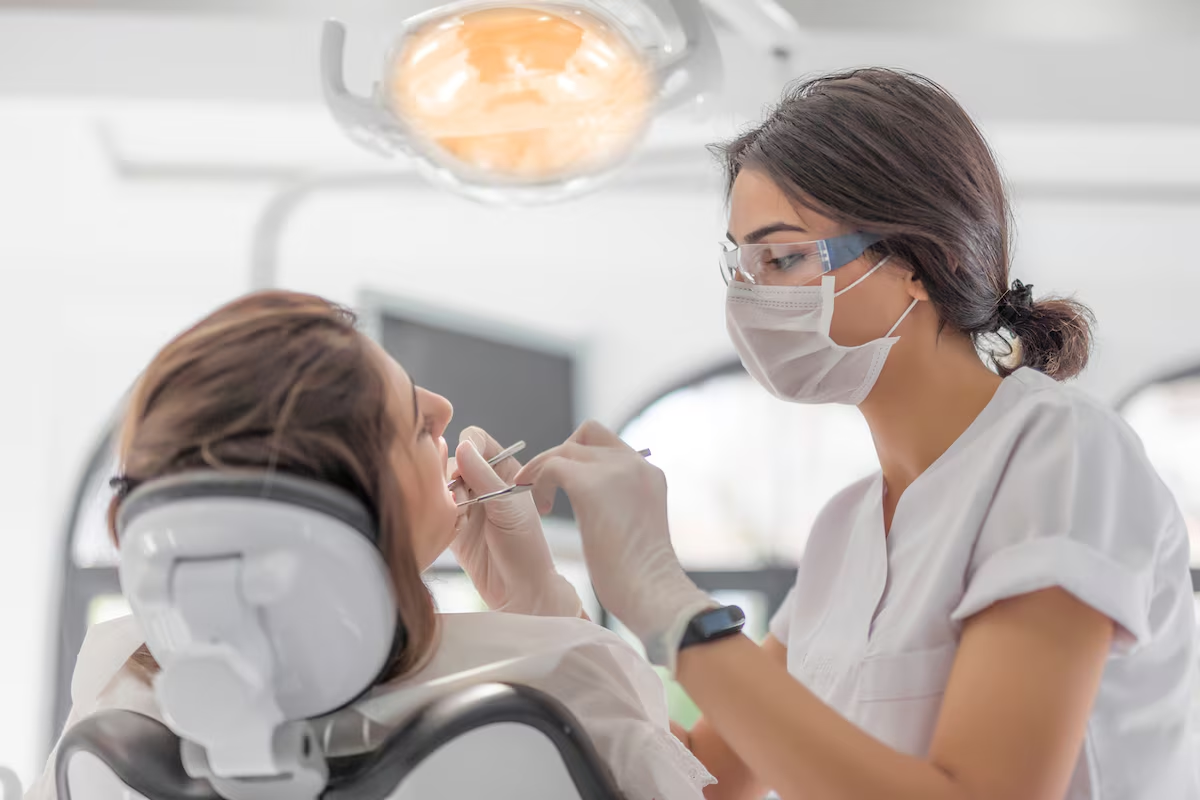
Many dental experts recommend visiting the dentist at least twice a year for preventive care.2 During these routine visits, you may receive a dental cleaning, exam and possibly some X-rays.
If you postpone these appointments, you’re not alone. Many people push off dental care for the following reasons:
- Cost concerns: Without insurance, routine dental visits can cost anywhere from $50 to $350.3 When you’re working within a tight budget, it can be hard to prioritize that expense, especially if you’re not currently experiencing any adverse symptoms.
- Busy schedules: Between work, family and responsibilities at home, it can be difficult to find time to schedule and attend a dental appointment.
- Dental anxiety: Nearly 73% of American adults say they’re afraid to go to the dentist, with over 25% describing their fear as “severe.”4
While these reasons are understandable, delaying routine care may allow minor dental issues to progress into more complex problems.
The financial costs of forgoing routine dental care
Routine dental visits fall under the category of preventive care. As their name suggests, these visits help preserve your oral health and prevent more advanced dental issues from developing.
During a routine visit, your dental hygienist will remove plaque and tartar that you can’t remove at home. If left unaddressed, this buildup can lead to cavities or gum disease.
Your dentist may also take X-rays to check for early signs of issues like tooth decay or bone loss. When caught early, these problems are typically easier and less expensive to treat.
How neglecting dental care can impact your overall health
The financial impact of skipping dental care doesn’t stop at the dentist’s office. It can also affect other areas of your life. That’s because your oral health is closely connected to your overall health. If you develop dental issues like gum disease, the resulting inflammation and bacteria can spread through your bloodstream and affect other parts of your body.5
Many studies link poor oral health with the following conditions:6
- Heart disease
- Diabetes
- Respiratory issues
- Dementia
- Pregnancy complications
- Oral cancers
If you develop these types of conditions, you may face higher health care and medication costs, along with a meaningful decline in your overall health and quality of life.
How poor oral health can impact your daily life and confidence
Speaking of your quality of life, dental issues can impact how you feel on a daily basis. From tooth sensitivity to cosmetic concerns, oral health problems may make it harder to eat, speak and smile with confidence.
How preventive care saves you money
Routine dental care can help your dentist catch issues when they are easier and less expensive to treat. In turn, you can maintain your oral health and your smile while protecting your financial well-being.
How dental insurance can help reduce these risks
If you worry about dental bills, dental insurance can help make routine care more affordable and accessible. Dental plans work by:
- Covering preventive services, like cleanings and exams near or at 100%
- Reducing your out-of-pocket costs for many basic and major procedures
- Making your dental care costs more manageable and predictable
Dental insurance coverage differs across plans, with varying benefits, deductibles and monthly premiums. In turn, you simply need to shop around for a policy that fits your budget and dental care needs.
Small investments in routine dental care can lead to big savings
Skipping regular dental visits may seem like a short-term solution, but it often ends up costing you more in the long run. By staying proactive with your routine care and choosing the right dental insurance, you can protect your oral health and your budget.
Sources:
- Frontiers. Access to oral health care and its social determinants across the lifespan in the United States. Updated on September 10, 2025. https://www.frontiersin.org/journals/oral-health/articles/10.3389/froh.2025.1619983/full. Accessed on April 27, 2026.
- Time Magazine. How Often Should You Really Go to the Dentist? Updated on June 9, 2025. https://time.com/7289262/how-often-should-you-go-to-dentist/. Accessed on April 27, 2026.
- Care Credit. Dental Exam and Procedure Costs. Updated on N/A. https://www.carecredit.com/dentistry/costs/. Accessed on April 27, 2026.
- ADA. September JADA finds dental fear still prevalent in US. Updated on September 02, 2025. https://adanews.ada.org/ada-news/2025/september/september-jada-finds-dental-fear-still-prevalent-in-us/. Accessed on April 27, 2026.
- Penn Dental Medicine. Understanding the Connection Between Oral Health and Overall Health. Updated on August 6, 2024. https://penndentalmedicine.org/blog/connection-between-oral-health-and-overall-health/. Accessed on April 27, 2026.
- Penn Dental Medicine. Understanding the Connection Between Oral Health and Overall Health. Updated on August 6, 2024. https://penndentalmedicine.org/blog/connection-between-oral-health-and-overall-health/. Accessed on April 27, 2026.