
The Quiet Revolution Happening Inside the Jewellery Industry
Something significant has shifted in the world of fine jewellery. Consumers who once equated luxury exclusively with mined diamonds are now asking sharper, more informed questions — about origin, ethics, environmental impact, and value. The answers they are finding are leading them, in growing numbers, toward lab-grown diamonds. This is not a trend driven by compromise. It is a movement driven by knowledge. And it is reshaping the industry from the inside out, challenging long-held assumptions about what makes a diamond truly precious.
What Makes a Lab-Grown Diamond Real?
The term "lab-grown" can be misleading to those unfamiliar with the science. These are not imitations, simulations, or substitutes. Lab-grown diamonds are chemically, physically, and optically identical to mined diamonds. They are composed of pure carbon atoms arranged in the same crystalline structure that gives natural diamonds their legendary hardness and brilliance. The only meaningful difference is where the growth process takes place — inside a controlled laboratory environment rather than deep within the earth over millions of years.
Two primary methods are used to create these stones: High Pressure High Temperature (HPHT) and Chemical Vapor Deposition (CVD). Both replicate the conditions under which diamonds form naturally, producing stones that are graded using the same internationally recognised standards — cut, colour, clarity, and carat weight — applied to mined diamonds. A gemologist examining a lab-grown diamond without specialist equipment cannot distinguish it from one pulled from the earth. That is not a marketing claim. It is a scientific fact.
Understanding the Difference Between Lab-Grown and Simulated Diamonds
It is worth drawing a clear distinction here, because confusion between lab-grown diamonds and simulated diamonds remains common. Simulated diamonds — such as cubic zirconia or moissanite — look similar to diamonds but are made from entirely different materials with different chemical compositions. They do not share the same hardness, refractive index, or durability. For a thorough breakdown of what simulated diamonds are and how they compare to the real thing, it is worth consulting expert resources that explain the distinctions clearly. Lab-grown diamonds, by contrast, are real diamonds in every measurable sense — they simply did not require mining to exist.
The Ethical and Environmental Case for Lab-Grown Diamonds
For many buyers, the appeal of lab-grown diamonds begins with conscience. The traditional diamond mining industry, despite significant reforms over the decades, still carries associations with environmental disruption, community displacement, and in some regions, conflict financing. While certified ethical mining practices have improved the situation considerably, the fundamental act of extracting diamonds from the earth carries an ecological cost that cannot be entirely eliminated.
Lab-grown diamonds sidestep many of these concerns. They require no large-scale land excavation, produce no mining waste, and can be manufactured using renewable energy sources. For a generation of consumers who factor sustainability into purchasing decisions across every category — from food to fashion to fine jewellery — this matters enormously. Choosing a lab-grown diamond is not a sacrifice of quality or beauty. It is an alignment of values with aesthetics, and that combination is proving to be a powerful driver of demand.
Value Without Compromise
Beyond ethics, there is a compelling financial dimension to lab-grown diamonds. Because they do not require the extensive supply chain associated with mining — exploration, extraction, transportation, and multiple layers of trading — they are typically available at a significantly lower price point than comparable mined stones. This does not reflect inferior quality. It reflects a more efficient production model. Buyers can access larger, higher-quality stones within the same budget, or invest the savings elsewhere. For engagement rings in particular, this represents a meaningful shift in what is achievable at every price level.
Leon Diamond: Crafting Excellence in Lab-Grown Jewellery
Among the jewellers who have embraced lab-grown diamonds with genuine expertise and creative vision, Leon Diamond stands out as a destination for those who refuse to compromise on craftsmanship or character. Specialising in bespoke and ready-to-wear fine jewellery featuring lab-grown diamonds, Leon Diamond brings together the precision of modern gemological science with the artistry of traditional jewellery making. Every piece is designed with intention, ensuring that the stone at its centre is matched by a setting worthy of its brilliance.
Bespoke Design as a Core Philosophy
What distinguishes Leon Diamond from many competitors is the emphasis on personalisation. The studio understands that jewellery — particularly pieces marking significant life moments — should feel singular. Their bespoke design process allows clients to collaborate directly with skilled craftspeople, selecting stone specifications, metal types, and setting styles that reflect individual taste rather than off-the-shelf convention. The result is jewellery that carries genuine meaning, not just monetary value.
The Growing Global Market for Lab-Grown Diamond Jewellery
The appetite for lab-grown diamonds is not confined to any single market. From North America to Europe to the Middle East, consumers are embracing these stones with increasing enthusiasm. The UAE in particular has emerged as a significant hub for lab-grown diamond jewellery, with a sophisticated clientele that values both luxury and innovation. For those exploring the finest options available in the region, a curated guide to the best lab-grown diamond jewellers in the UAE offers an excellent starting point for navigating this dynamic and growing market.
This global momentum reflects a broader cultural shift. Luxury is being redefined not by scarcity alone, but by quality, transparency, and the story behind an object. Lab-grown diamonds offer all three — exceptional quality, a transparent production process, and a story rooted in innovation rather than extraction.
Choosing the Right Lab-Grown Diamond for You
Selecting a lab-grown diamond follows the same principles as choosing any fine diamond. The four Cs — cut, colour, clarity, and carat — remain the primary benchmarks of quality. Cut is arguably the most important factor, as it determines how effectively the stone captures and reflects light. A well-cut lab-grown diamond will outshine a poorly cut mined stone of greater size every time. Colour and clarity grades follow international standards, and reputable jewellers will provide certification from recognised gemological laboratories to verify these specifications.
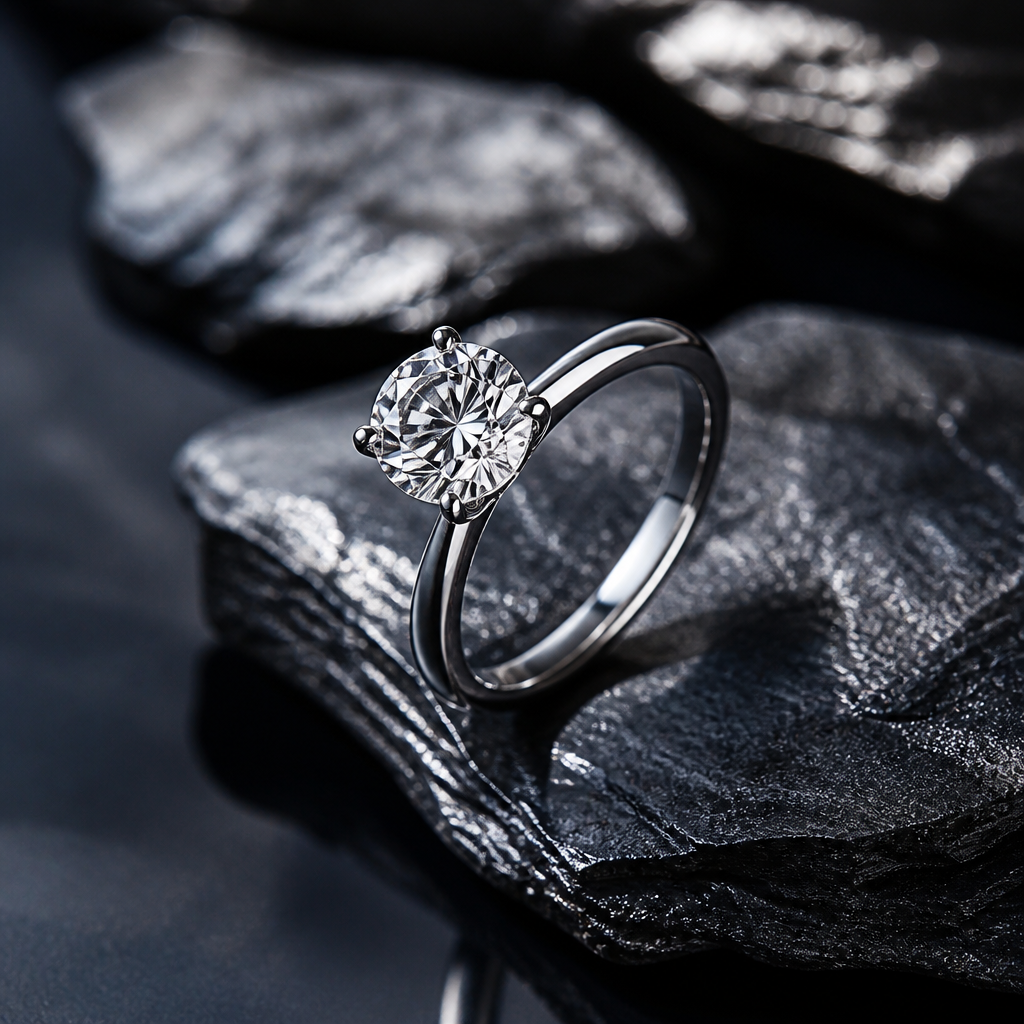
Beyond the technical specifications, the right diamond is the one that resonates personally. Whether it is a round brilliant solitaire for an engagement ring, a cushion-cut stone for a pendant, or a collection of smaller diamonds set into an eternity band, the choice should reflect the wearer's personality and the occasion it marks.
Conclusion: A New Standard for Fine Jewellery
Lab-grown diamonds are not a passing phase in the jewellery industry. They represent a fundamental evolution in how we think about precious stones — their origins, their impact, and their meaning. As science continues to advance and consumer awareness deepens, these diamonds will only become more central to the fine jewellery landscape. For buyers seeking beauty, quality, and integrity in a single purchase, lab-grown diamonds offer something genuinely rare: a choice that feels as good as it looks.