
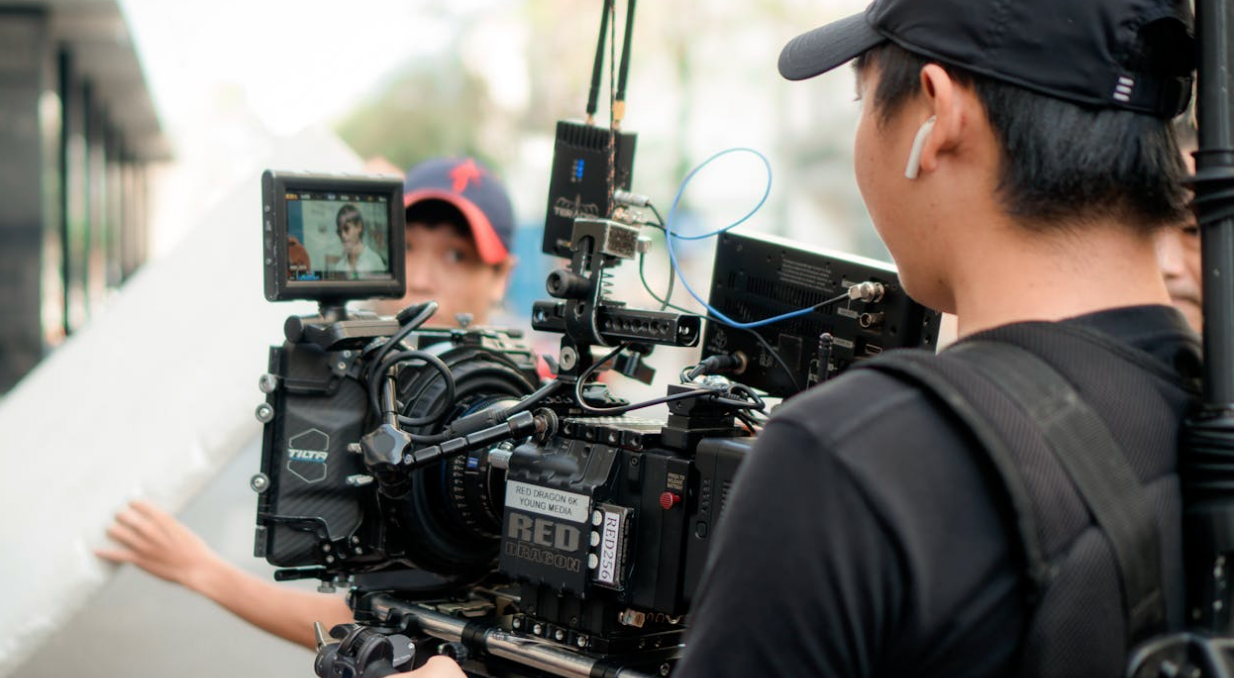
Have you ever watched a movie and wondered who actually made it happen? Not just the actors on screen, but the people behind the scenes pulling strings, shaping scenes, and making decisions that you never see. Filmmaking is a team effort, but the creative roles within it are far from identical. Each role carries its own kind of power, pressure, and personality.
Understanding these differences matters more today than ever, as streaming platforms, AI tools, and global audiences reshape how stories are told.
The Director as the Story’s Compass
A director is often seen as the “face” of a film’s creative vision, but the job goes deeper than calling “action.” Directors interpret the script, guide actors, and decide how each scene feels emotionally. When Greta Gerwig brought Barbie to life, her direction turned what could have been a toy ad into a cultural conversation.
Directors translate ideas into images, which means they constantly balance creativity with time and budget limits. They are responsible for tone, pacing, and performance. If a film feels off, people usually point to the director first, fairly or not.
The Producer as the Project’s Backbone
While directors shape the story, producers make sure the story actually gets made. They secure funding, hire key staff, and keep the project moving forward. The question of producer vs director salary often comes up because it reflects their different responsibilities. Producers usually earn based on the project’s financial success, while directors may receive upfront fees plus bonuses.
In today’s streaming-driven industry, producers are gaining more influence. Platforms like Netflix and Amazon rely on producers to manage large-scale content pipelines. A good producer knows how to solve problems quickly, whether it is a budget issue or a sudden casting change.
Screenwriters Build the Foundation
Every film starts with a script, and that script shapes everything that follows. Screenwriters create characters, dialogue, and structure. Without them, there is no story to direct or produce. Yet, they often receive less public attention than directors or actors.
Recent Hollywood strikes have highlighted how undervalued writers can be, especially in the age of streaming. Writers argued for fair pay and better credit, pointing out that their work drives the entire industry. A strong script can elevate a modest film, while a weak one can sink even the biggest production.
Cinematographers Paint with Light
Cinematographers, or directors of photography, control how a film looks. They decide on lighting, camera angles, and visual style. Think of the moody shadows in a thriller or the bright colors in a comedy. That is their work.
As technology evolves, cinematographers now deal with digital cameras, drones, and even virtual production stages. Shows like The Mandalorian use LED walls instead of traditional sets, changing how scenes are shot. This role blends art with technical skill, requiring both creativity and precision.
Editors Shape the Final Experience
Editing is where a film truly comes together. Editors take hours of raw footage and turn it into a coherent story. They control pacing, transitions, and emotional impact. A well-edited scene can make audiences laugh, cry, or sit on the edge of their seats.
In the age of short attention spans and TikTok-style content, editing has become even more important. Viewers expect tight pacing and clear storytelling. Editors often work closely with directors, but they also bring their own judgment to the table, deciding what stays and what gets cut.
Production Designers Build the World
Production designers are responsible for the film’s visual environment. They create sets, choose locations, and design the overall look of the world. Whether it is a futuristic city or a small-town diner, they make it feel real.
This role has grown more complex with the rise of CGI and virtual sets. Designers now collaborate with visual effects teams to blend physical and digital elements. Their work is crucial for immersion, especially in genres like fantasy and science fiction where world-building is everything.
Sound Designers Create What You Hear
Sound design often goes unnoticed, but it plays a huge role in how a film feels. From background noise to special effects, sound designers build the audio world. A simple creak in a horror film can create more tension than any visual.
With audiences consuming content on everything from theater systems to smartphones, sound designers must think about different listening environments. Podcasts and streaming have also pushed sound storytelling into new spaces, making this role more relevant than ever.
Actors Bring It All to Life
Actors are the most visible part of filmmaking, but their work depends heavily on everyone else. They interpret the script, follow the director’s guidance, and connect with the audience. A great performance can make a film unforgettable.
In recent years, actors have also become more involved behind the scenes. Many now produce their own projects or collaborate closely with writers and directors. This shift reflects a broader trend in the industry, where creative roles are becoming more fluid and collaborative.
Casting Directors Find the Right Faces
Casting directors play a critical role in shaping how a story feels by choosing the right actors for each part. They look beyond fame and focus on chemistry, authenticity, and fit. A perfect example is how lesser-known actors often become breakout stars because a casting director saw something others missed.
In an industry now influenced by social media metrics and global audiences, casting decisions carry even more weight. A strong casting choice can elevate a script and support the director’s vision, while a poor one can weaken the entire film despite strong writing or production.
Filmmaking is not a simple hierarchy where one role matters more than another. It is a system where each piece depends on the others. As technology and audience habits continue to change, these roles will keep evolving. What stays constant is the need for collaboration, creativity, and a shared goal of telling a story that connects with people.